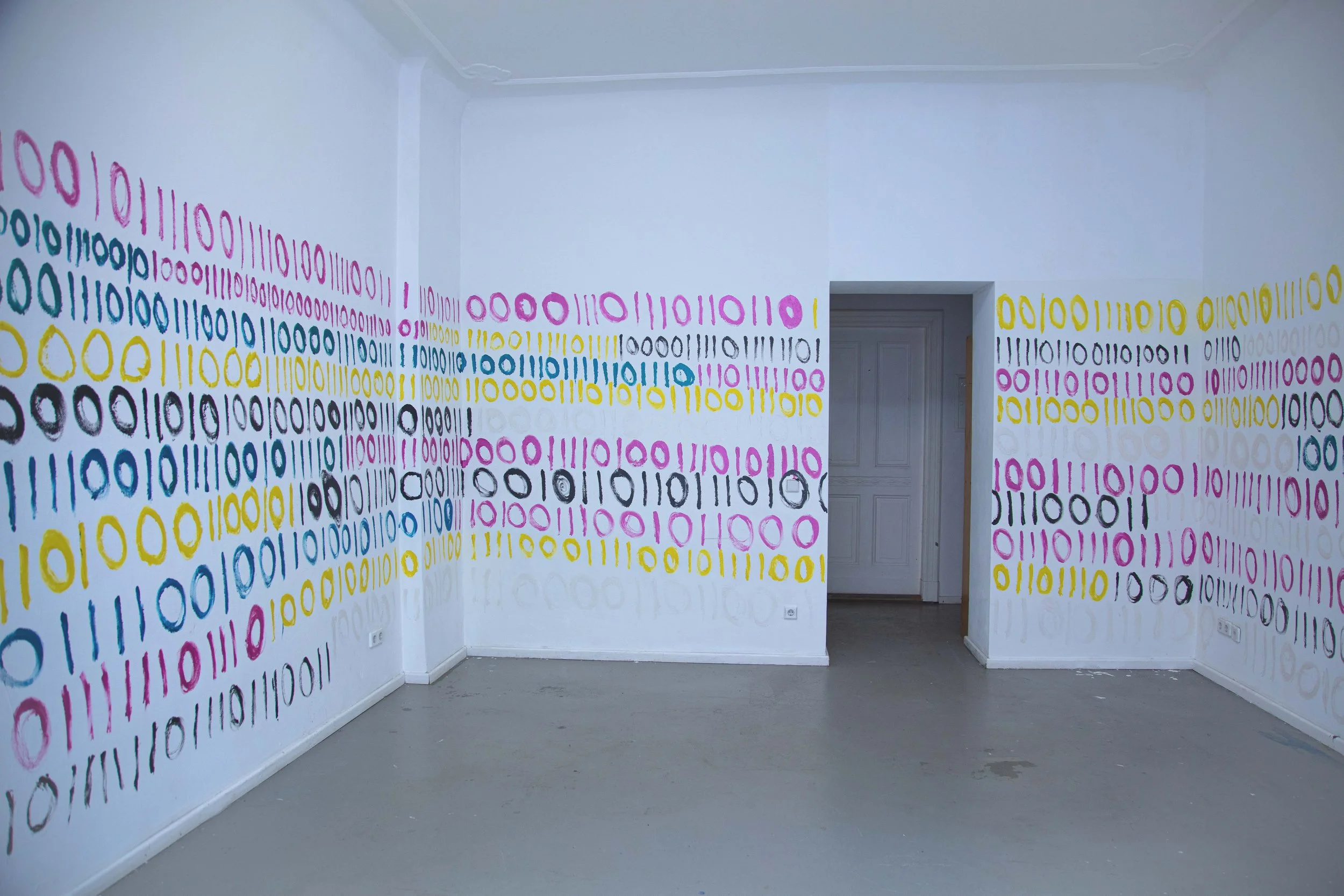
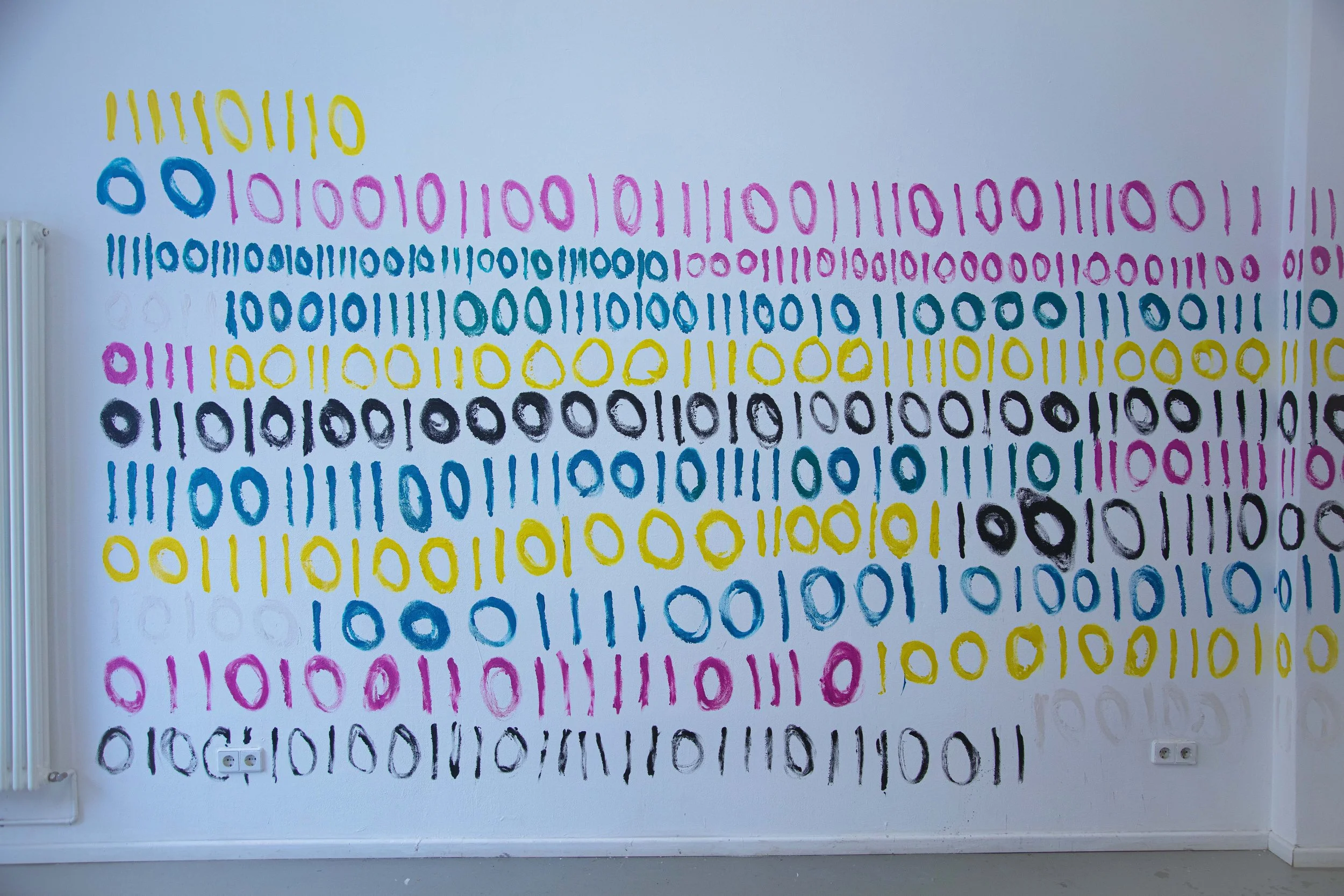
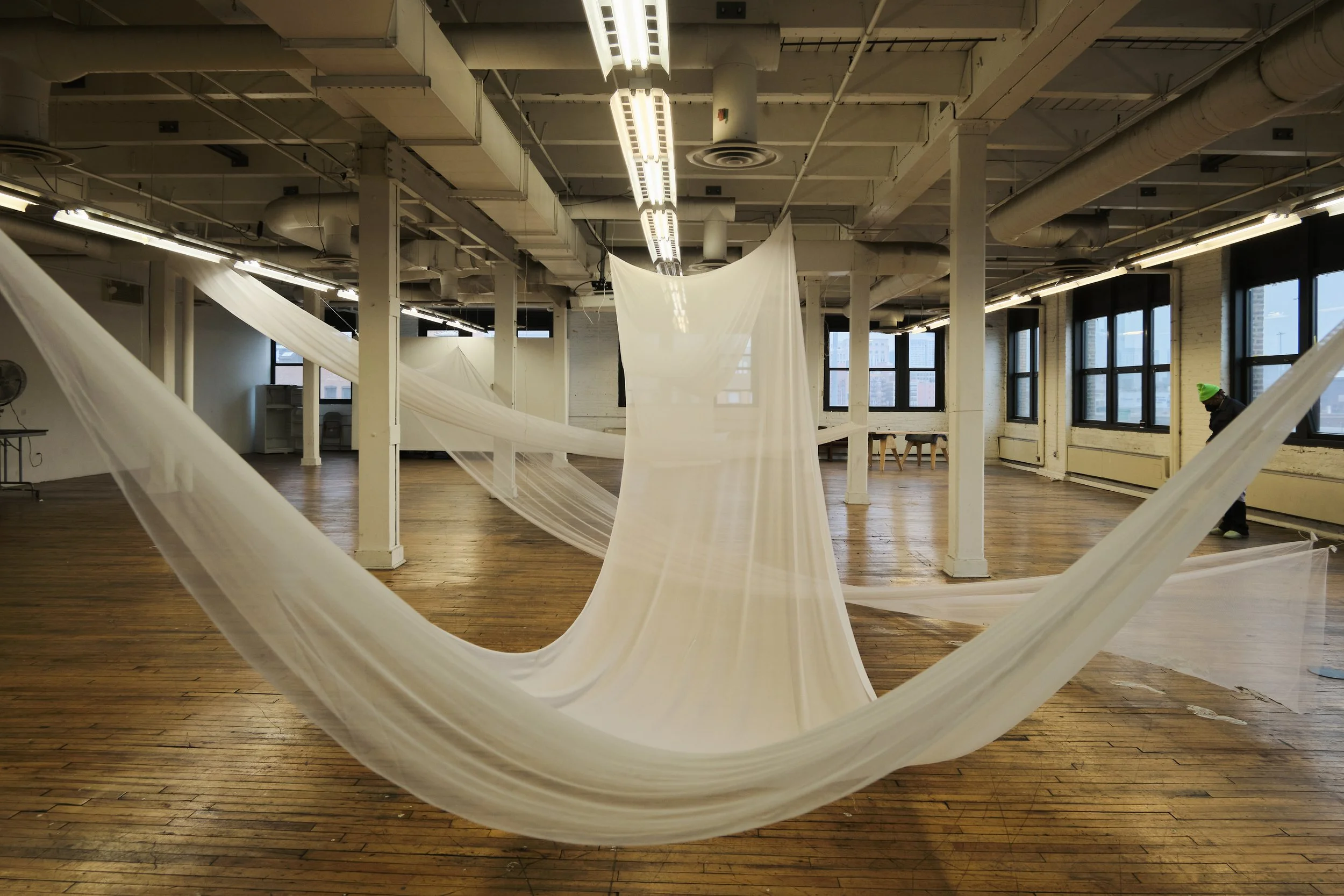
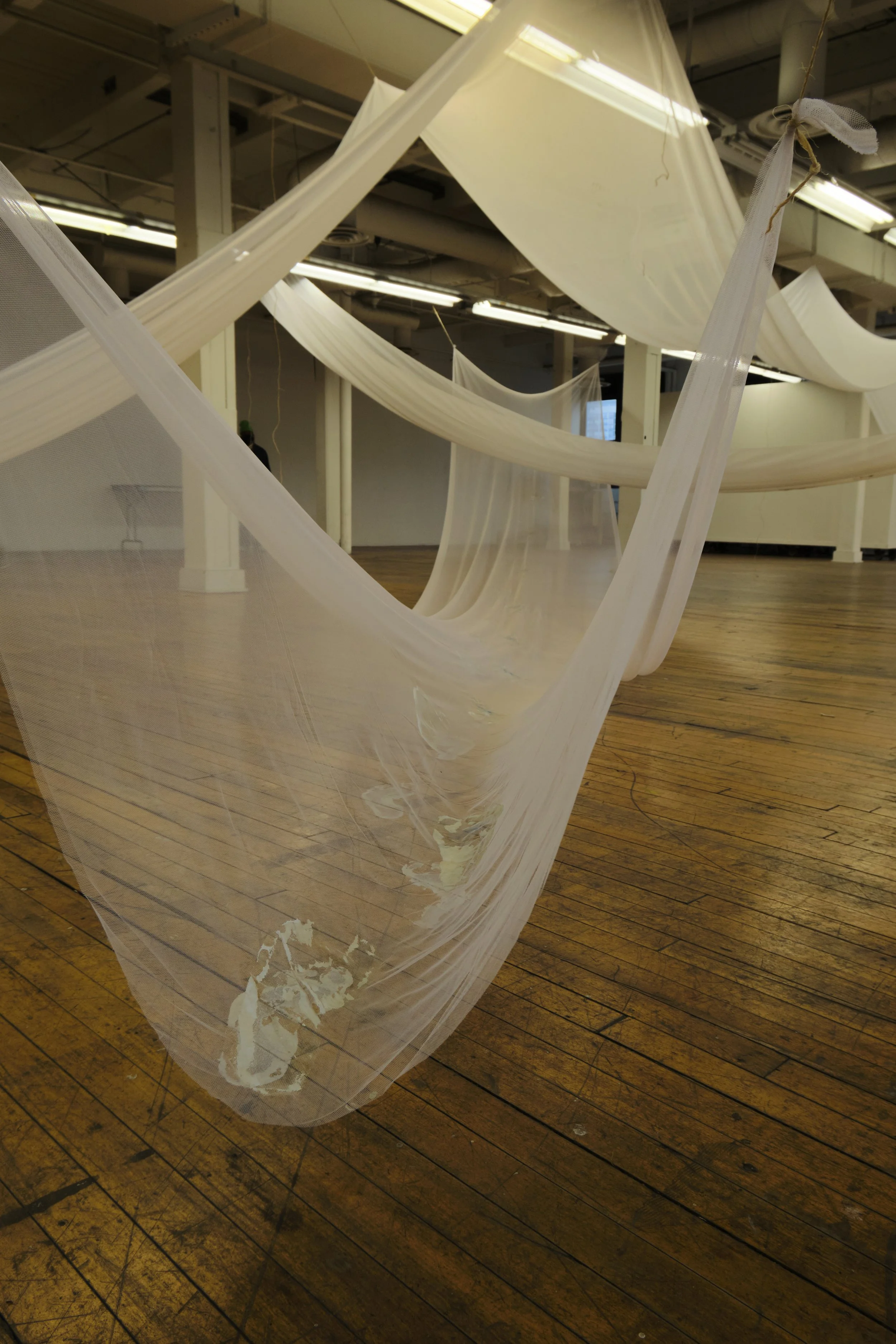
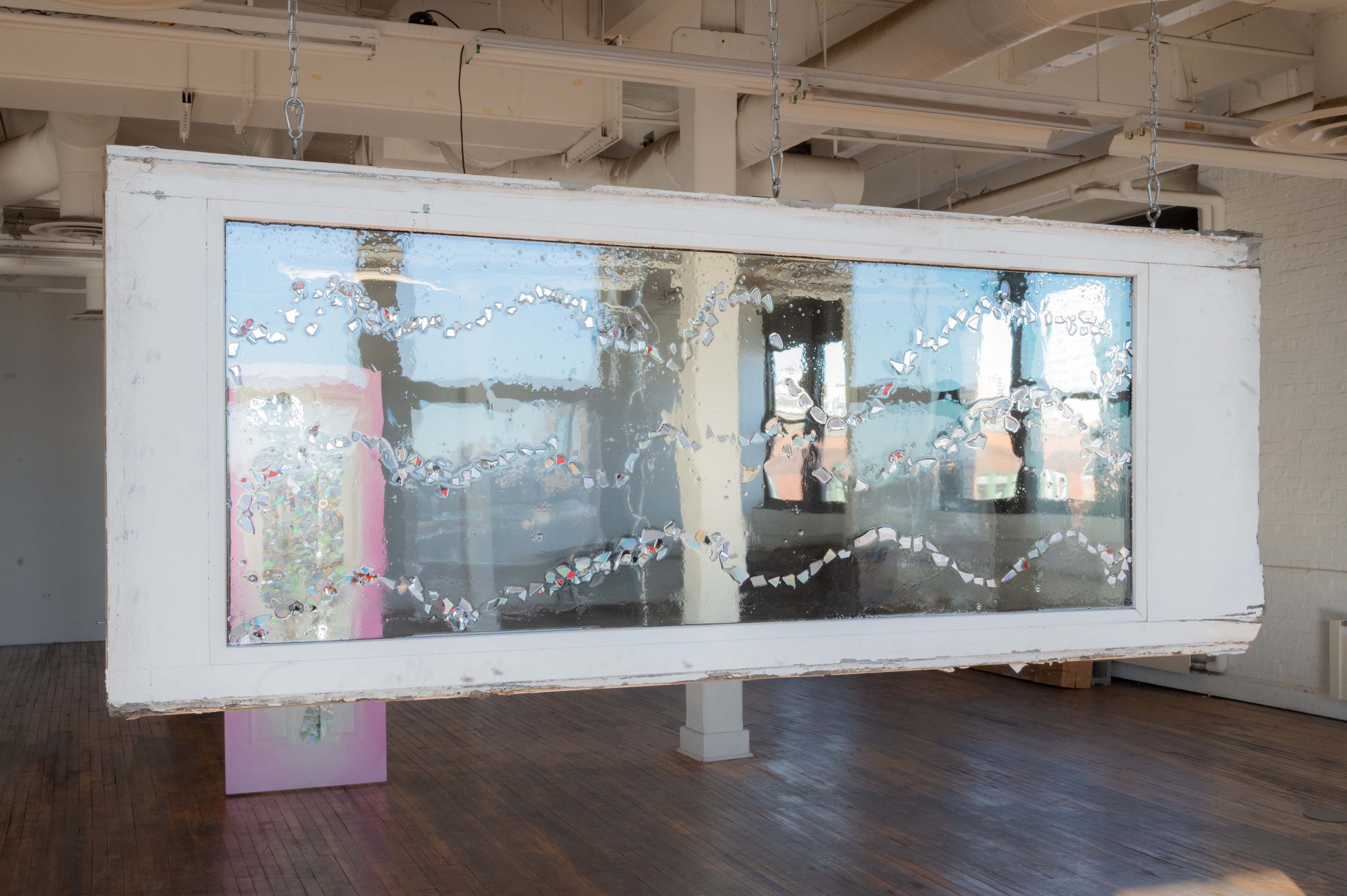
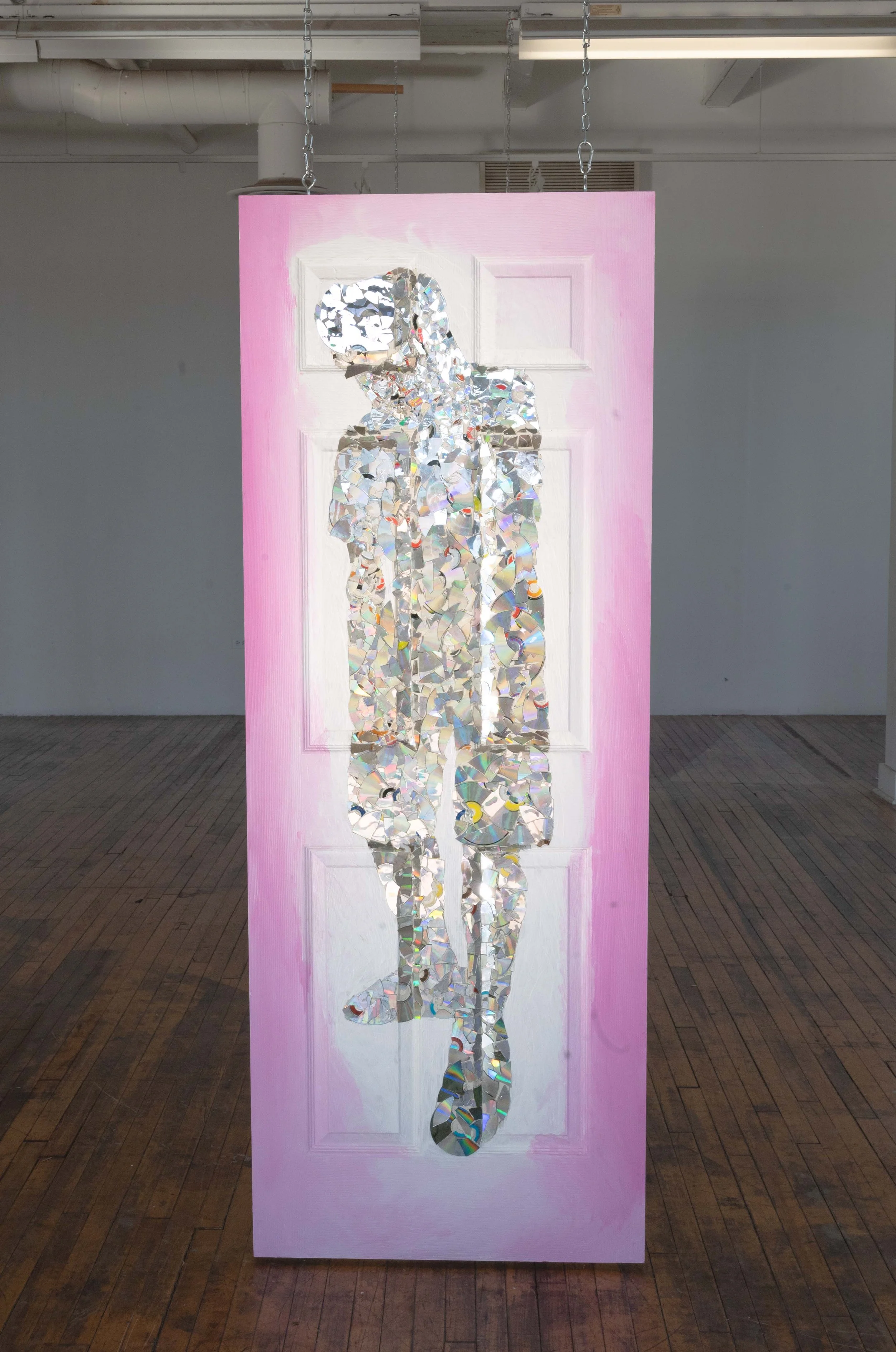
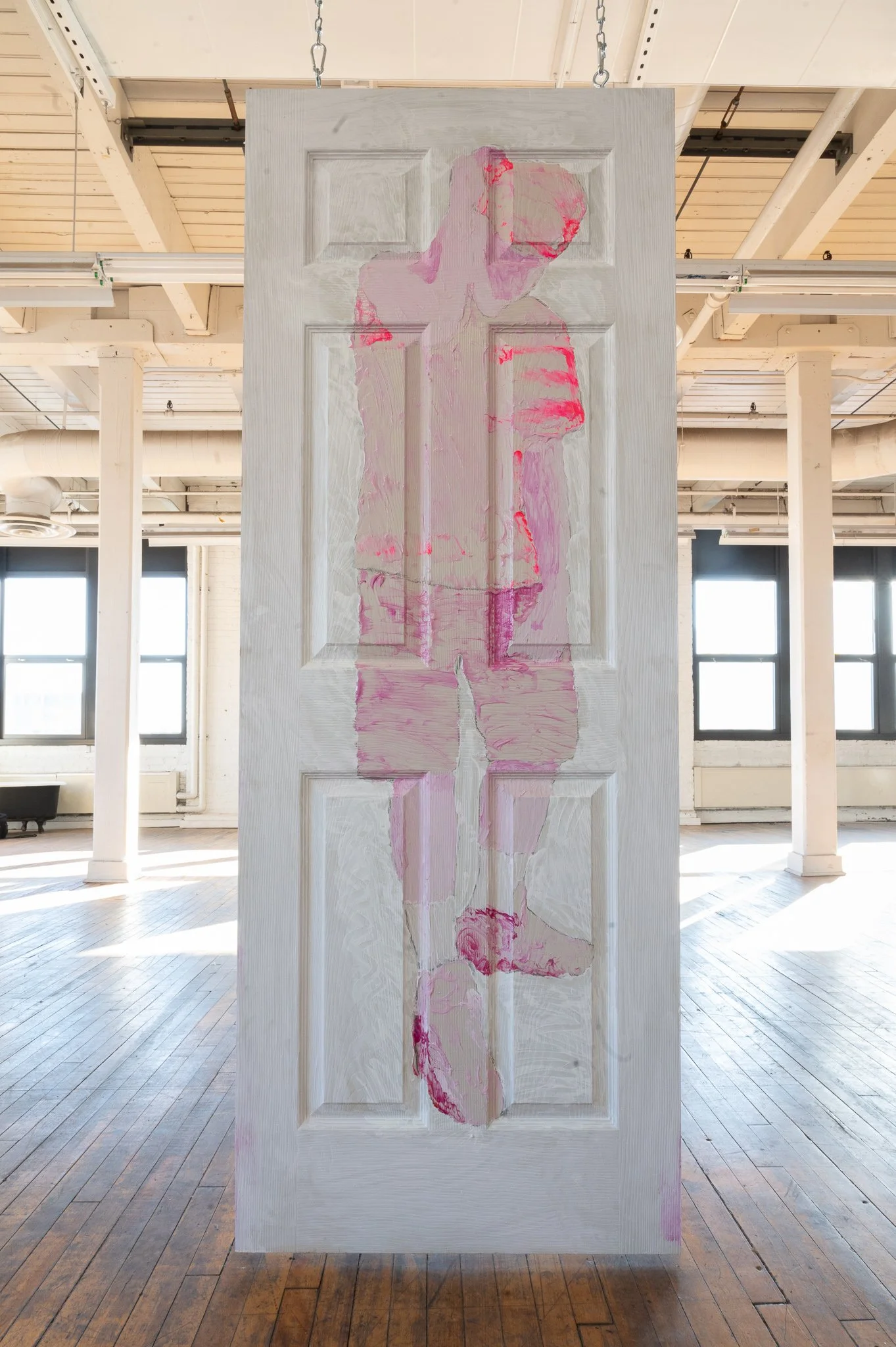
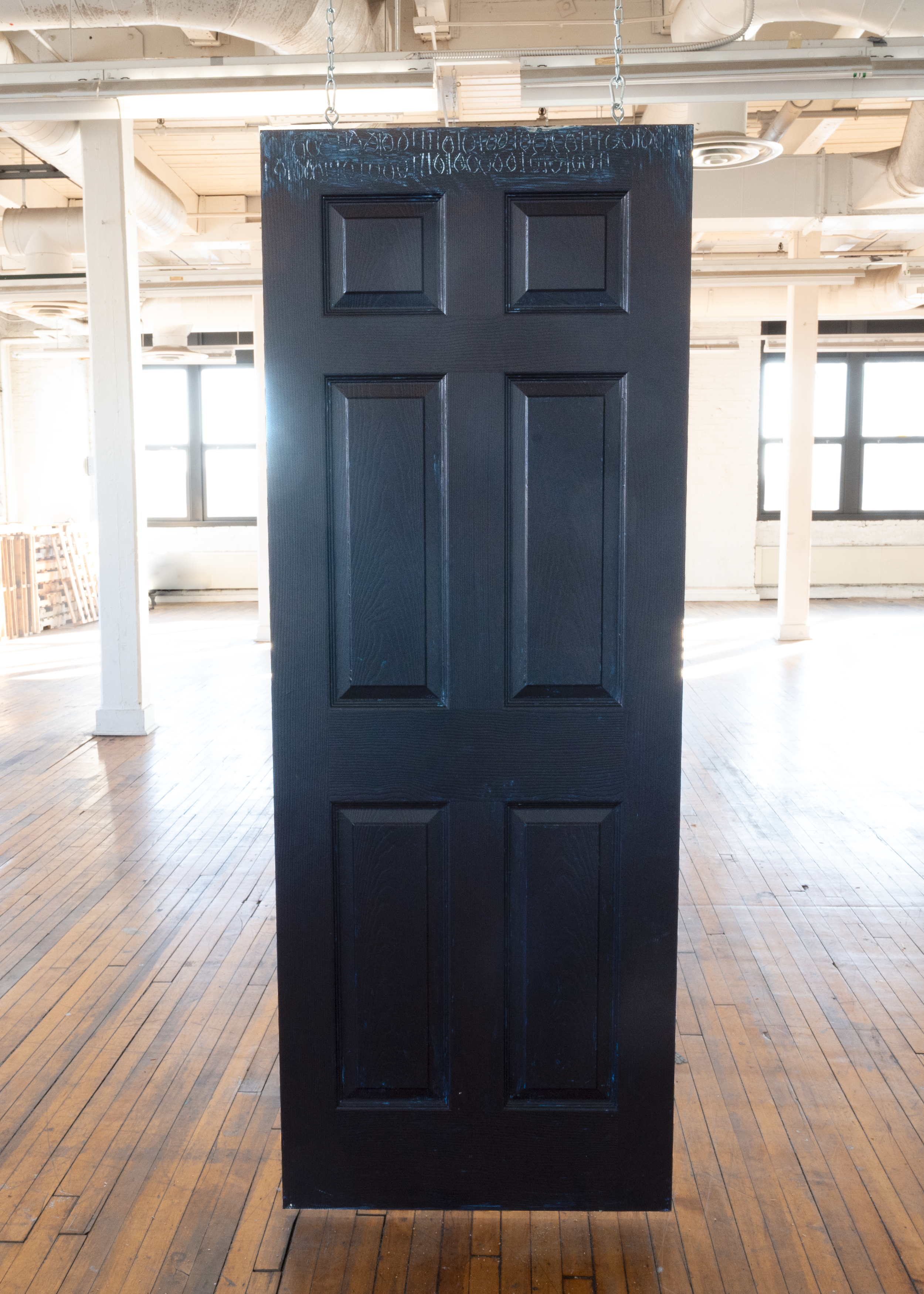
24 Days in Berlin (Yerrr breathe sigh extraction ego coolin GRACE expectations Karmic Deadness wakewatching Lackadaisical resistant PALPITATING Faith impulse GIRL Discern Gratuitous Headassery subject transmutation iteration)
Dimensions: approx. 37,500m3 or 1324ft3
Materials: Acrylic paint, plaster and cement
Painted by hand; installed over a period of 24 days– erroneous binary code translations of english and Black english words.
Site specific installation.
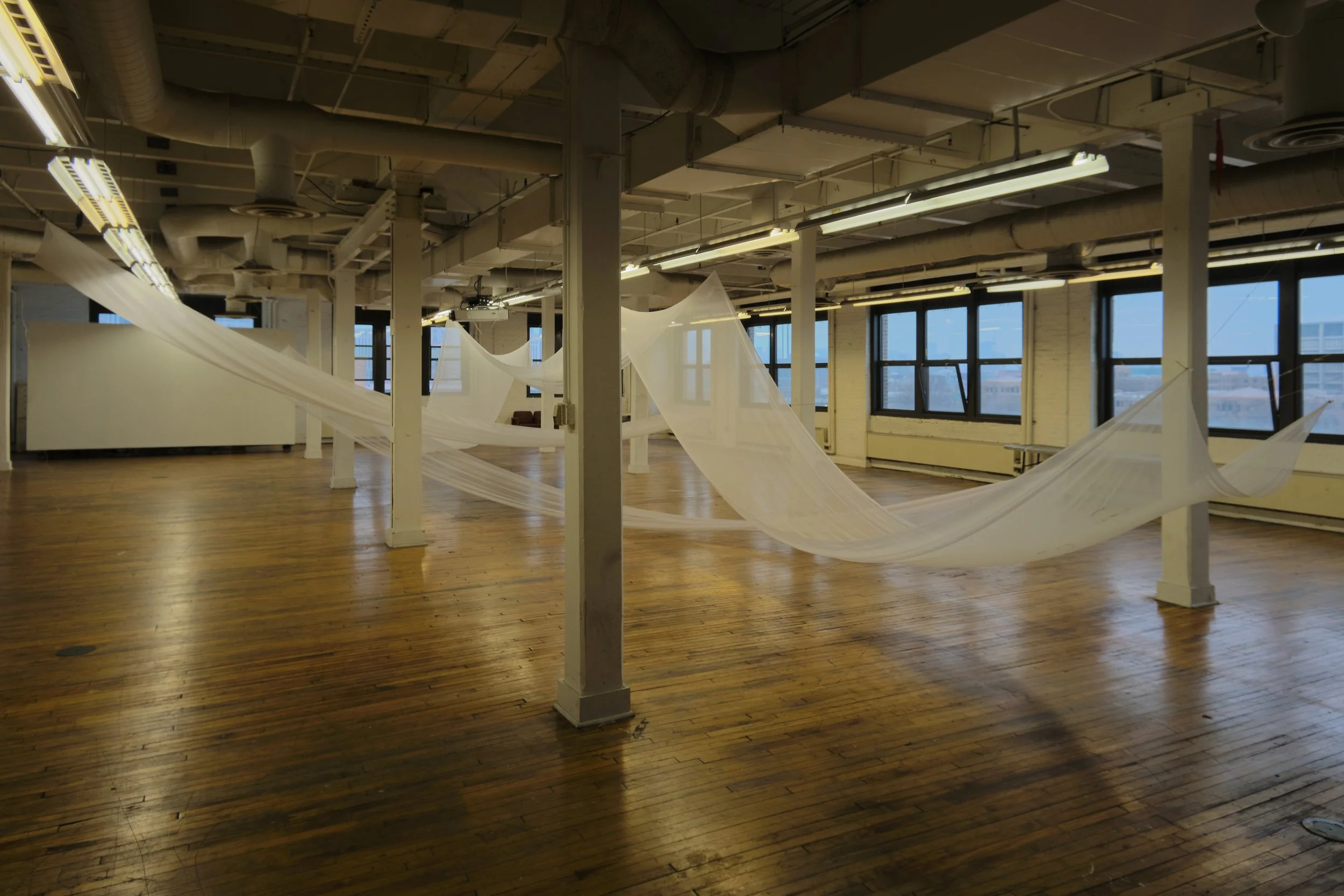
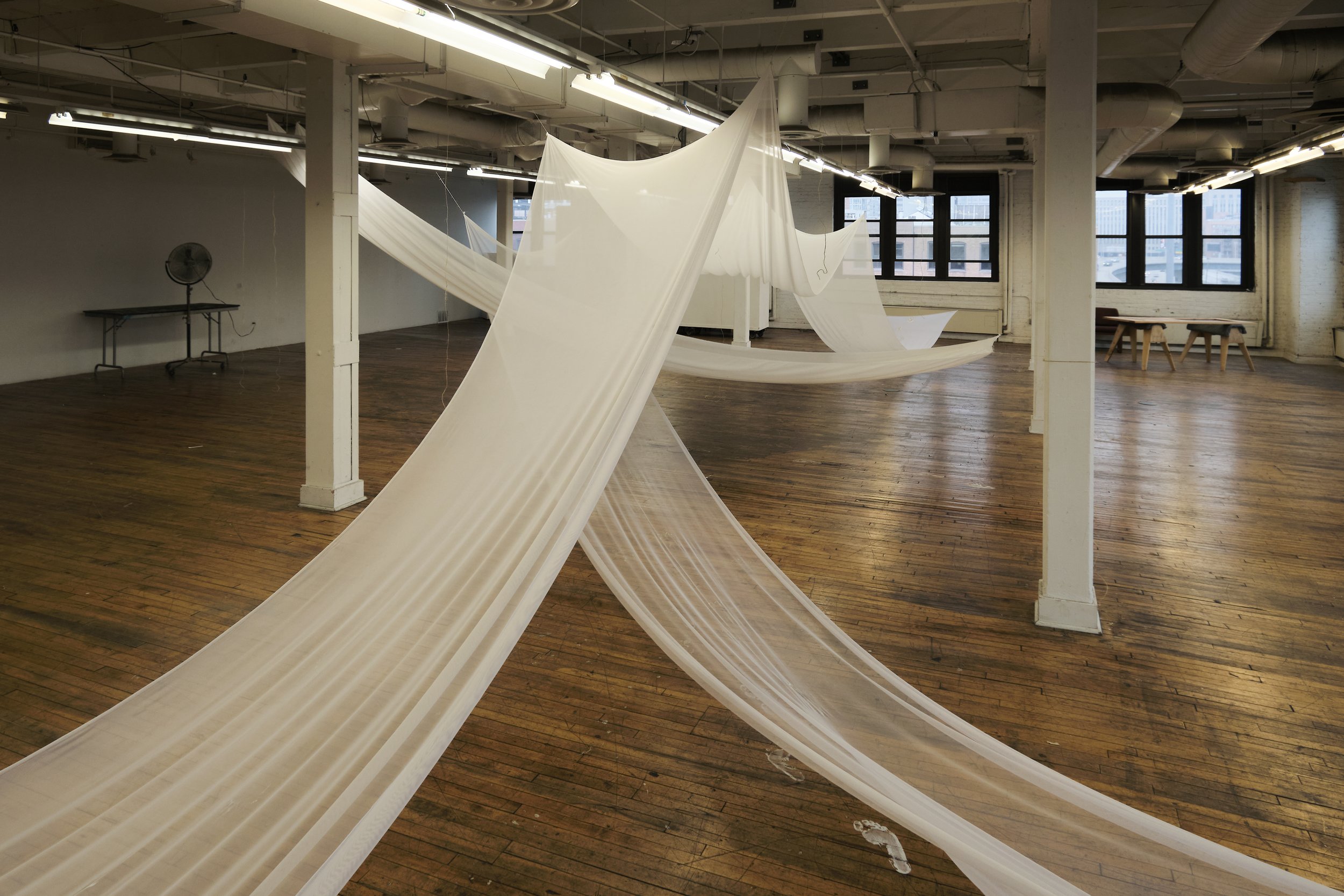
Materials: various fibers, twine, acrylic paint
Added Information: Questioning How Blackness’s relationship to death impacts our understanding of life and all that’s possible in it?
Pertinent quotes & excerpts—
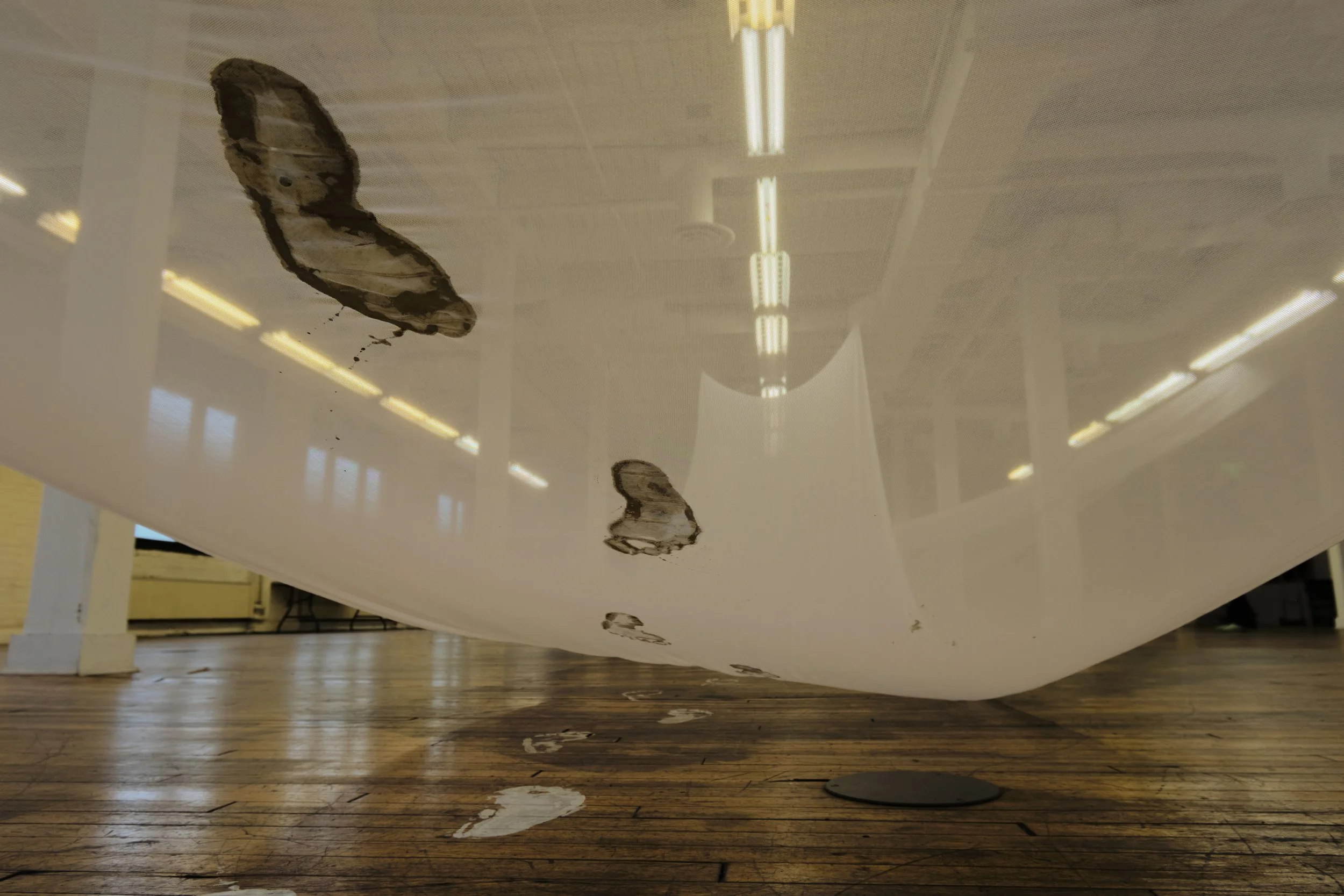
Embodiment lies on top of these, at the intersection of these with (possibly) my footprint(s) seeping through each fabric and printed on the floor of the space as well. This feels like the outcome is space- taken out, and given room to breathe, the room it deserves. The outcome(s) of interest are connection, barriers, embodiment, and transcendence. So, this aligns with portals- maybe similar to the doors. Mostly, in bringing together elements I framed before in a new way- the environment is; the wind, the people, the space, the ocean is the form, the movement, self, and blackness is; me, the paint, the twine? This seems to be a natural evolution but also a specific exploration of material and space. (Notes from practice, 11/29/22)
On material:
The actual design of the long flowing cotton gowns with long sleeves may vary slightly with the community, but most of them are sewn on machines from handed-down,traditional patterns cut from newspaper. Monroe churches' gowns have two narrow, torn strips of fabric tied around the gown-one around the waist and another below the knees, which function to keep the robe in place over the legs. Some believe that these ties represent the bonds of sin, and that after baptism, their removal signifies the freedom from sin and rebirth. The ritual of baptism in which the candidate is symbolically buried in Christ, where sins are washed away, and one is raised up to "walk in the newness of life."
"Take Me to the Water": African American River Baptism By Annie Staten and Susan Roach
On Epigenetics, embodiment, intergenerationality:
Embodiment refers to the many, many, many different ways that we literally incorporate the world outside us, in the expression of our biology. Embodiment gives you a frame to allow you to appreciate what the connections are, but recognizes a society as the key driver.. (Fatal invention, Dorothy Roberts, 2012)
The second meaning of subjugated knowledge, besides being buried, is forms of knowing that had been disqualified, considered nonsensical or nonscientific. It is “the knowledge of the psychiatrized, the patient, the nurse, the doctor, that is parallel to, marginal to, medical knowledge, the knowledge of the delinquent, what I would call, if you like, what people know.” By stating that it is the knowledge of what people know, Foucault is not referring to the taken for granted or dominant form of knowledge circulating but localized, particular, specific knowledge, what we might also call marginalized, experiential, or embodied knowledge. (Liat Ben Moshite, on Foucault)
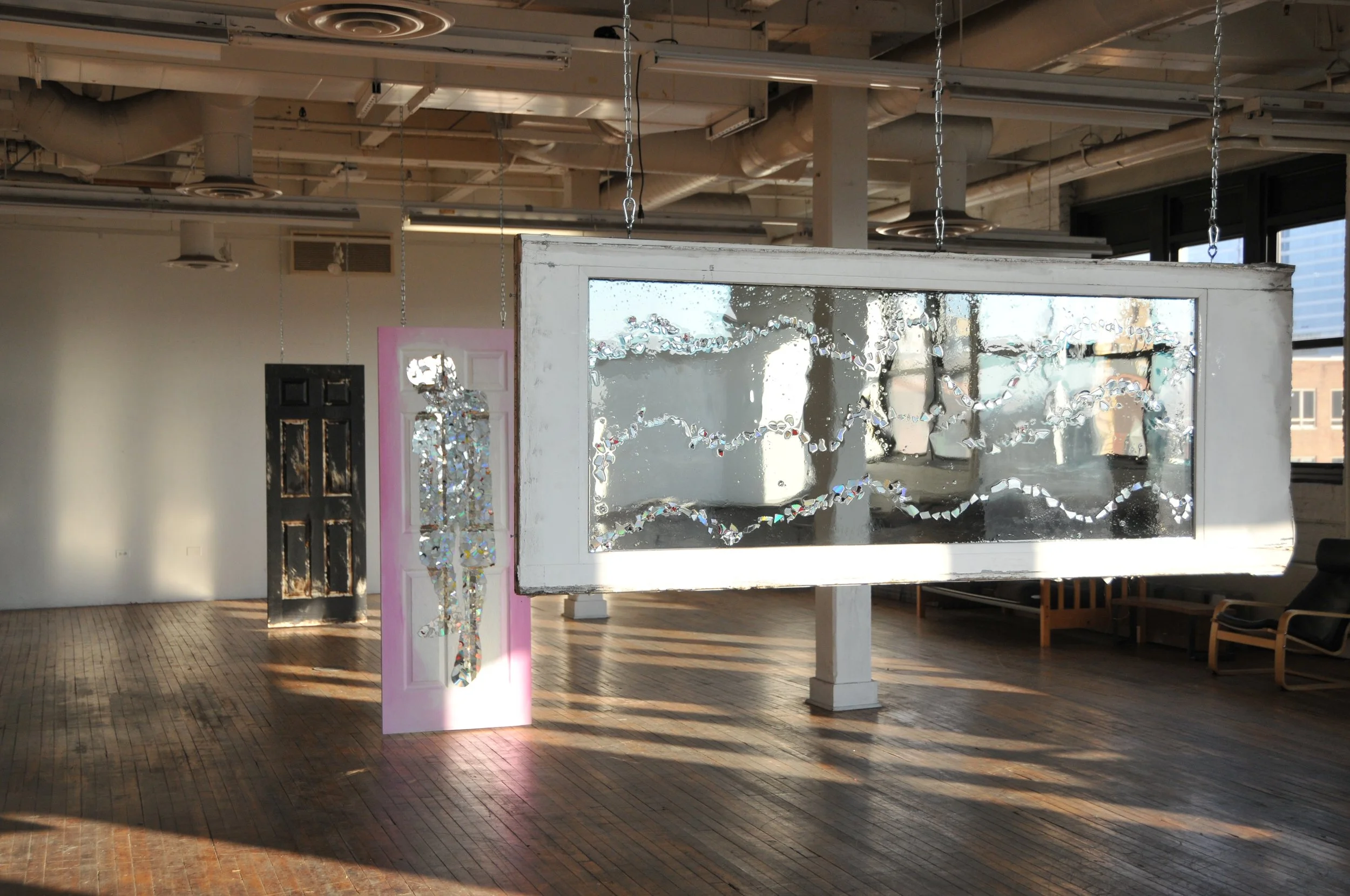
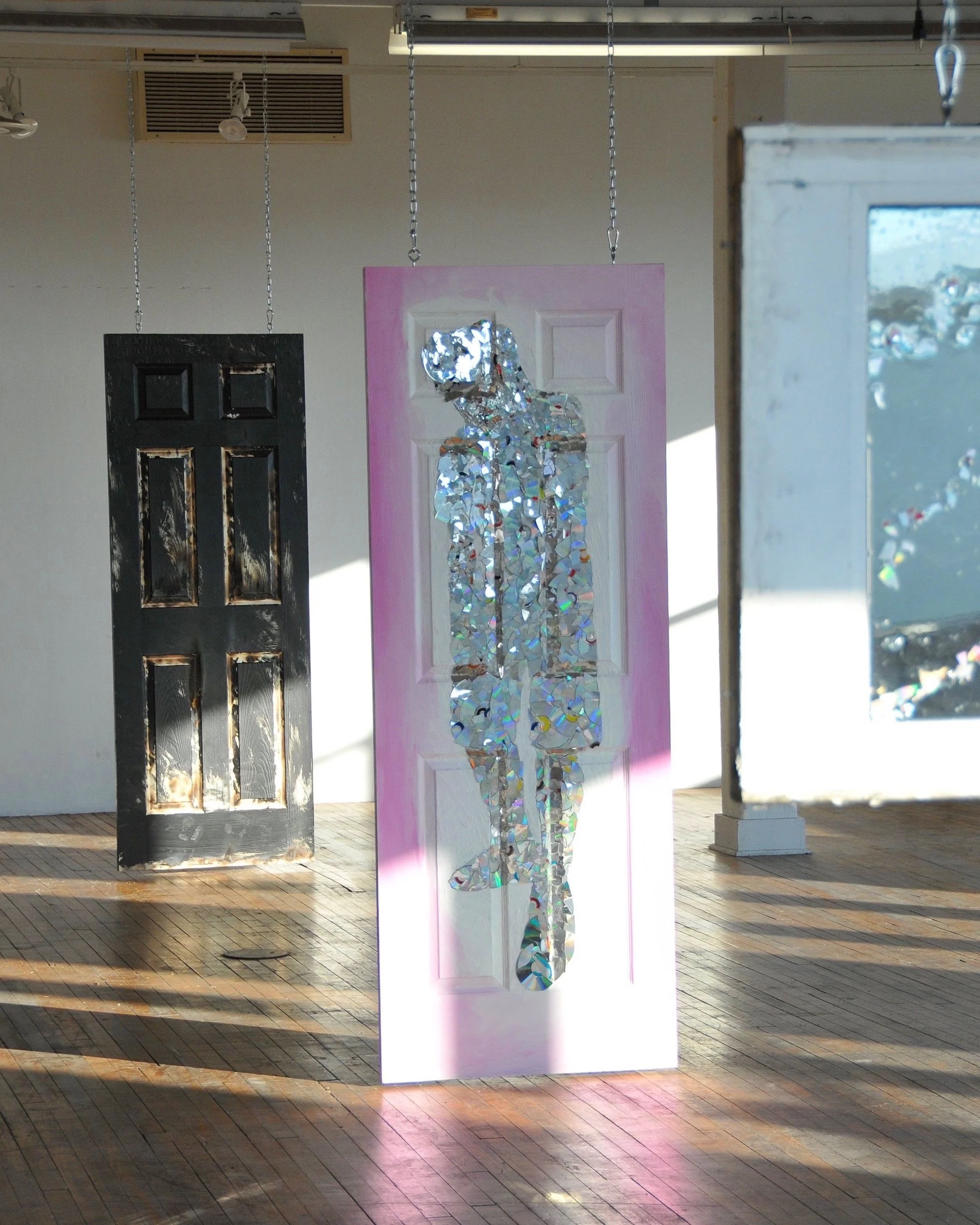
Photo documentation by Inseok Choi
Materials: Wood, acrylic paint, CD’s, glass, epoxy resin, propane torch and mixed metal.
“Blackness provided the occasion for self reflection as well an exploration of terror, desire, fear, loathing and longing.” (Scenes of Subjection, Saidiya Hartman, 1996)
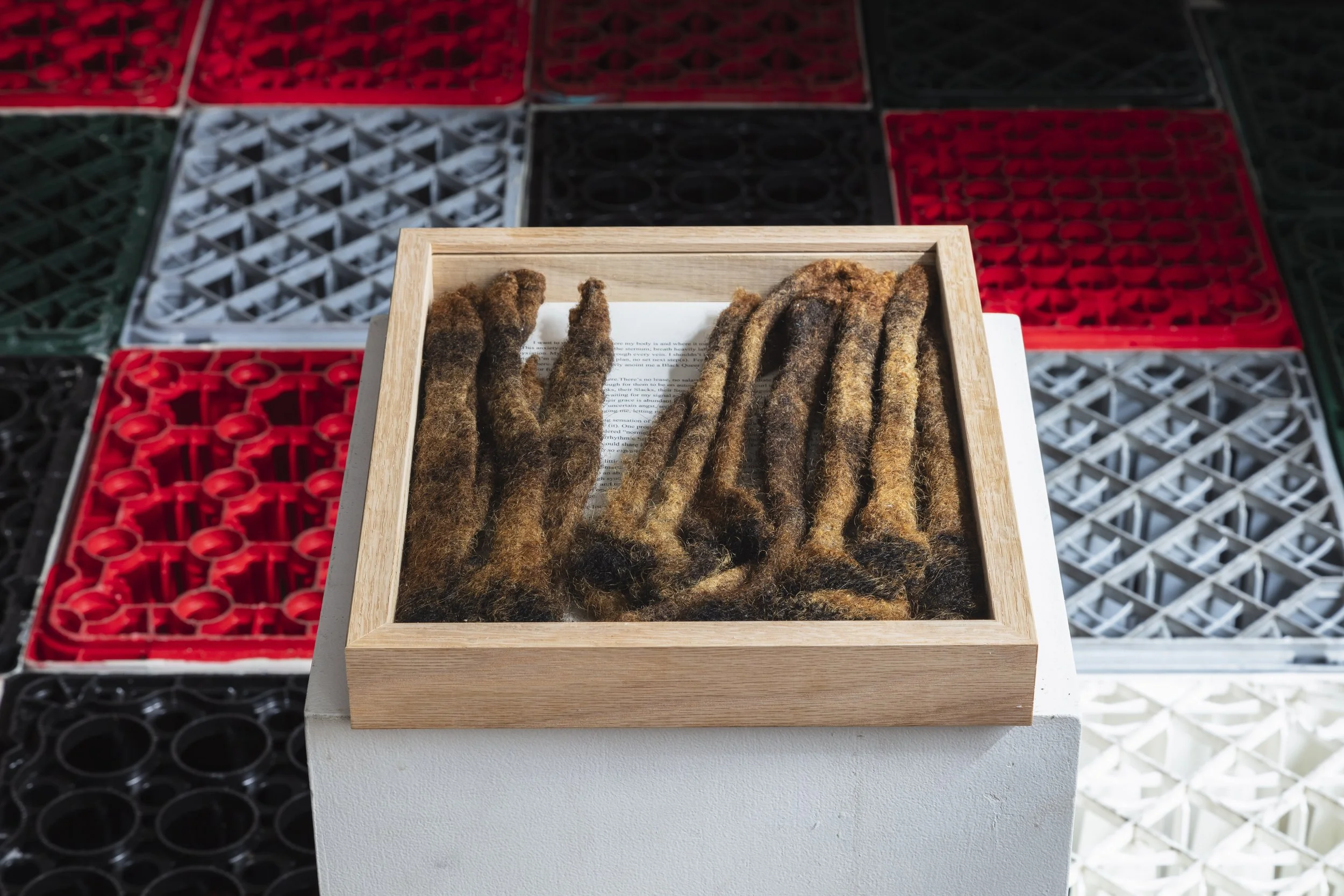
Dimensions: ~9.5in x 12in x 1.5in or 24cm x 30cm x 4cm
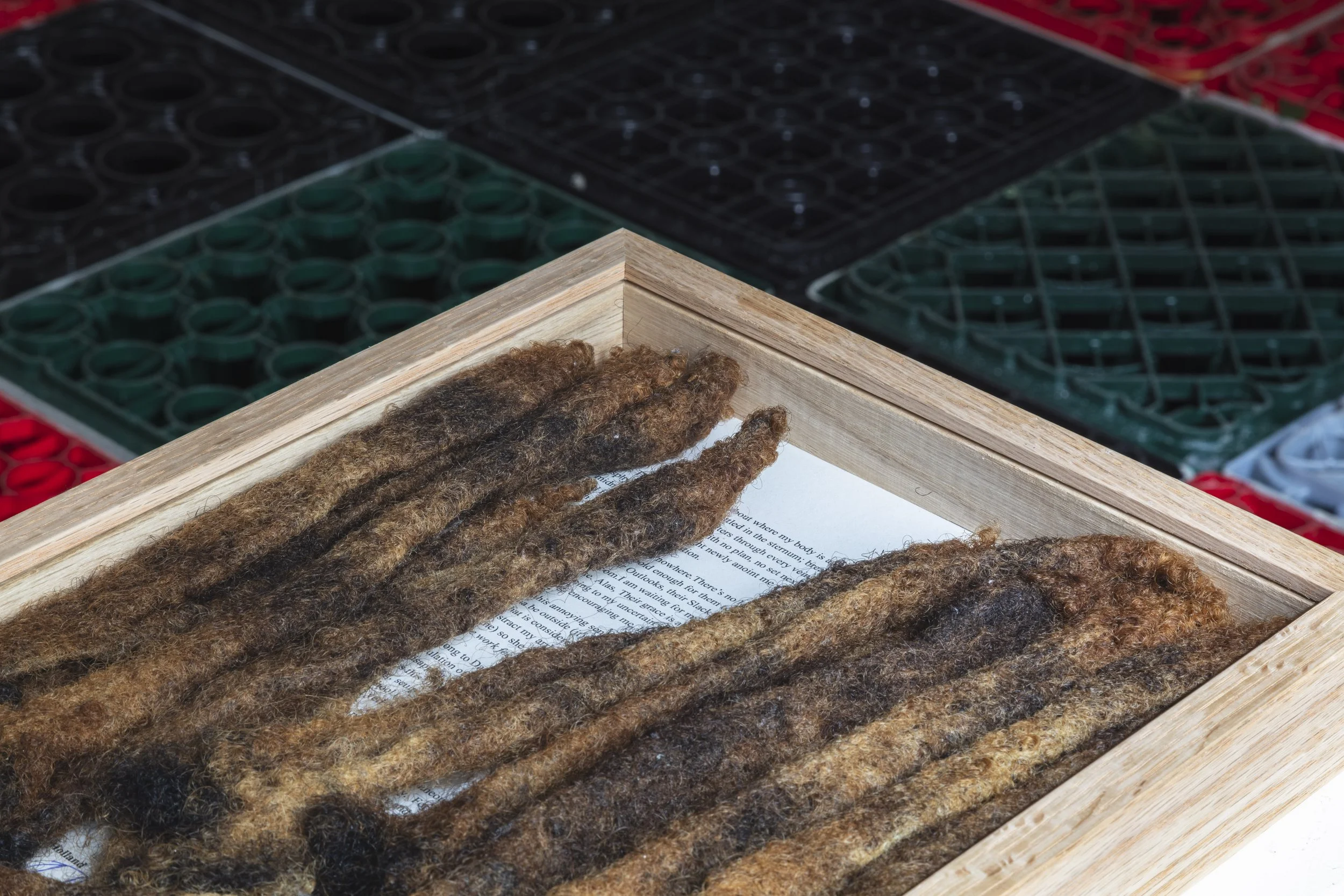
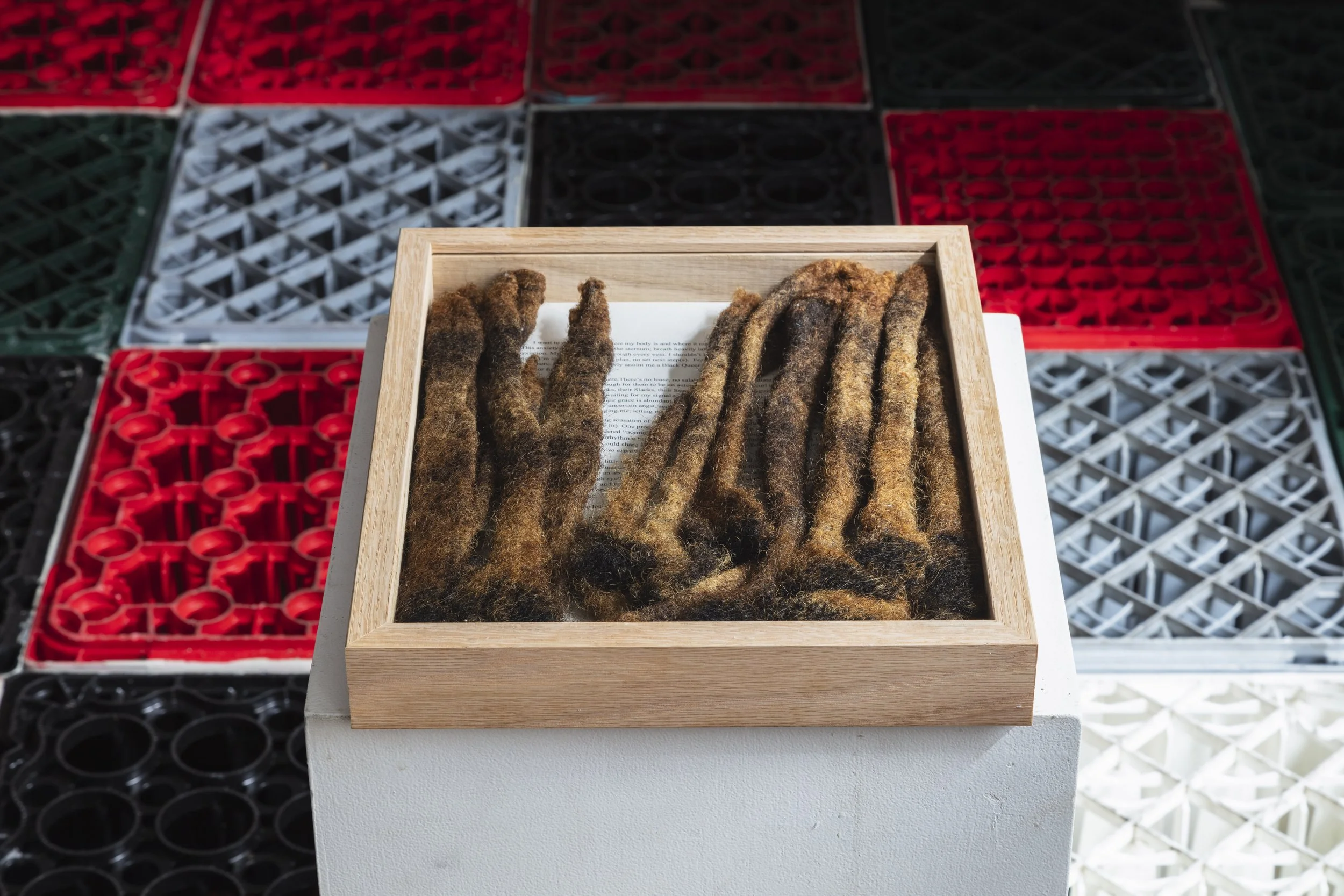
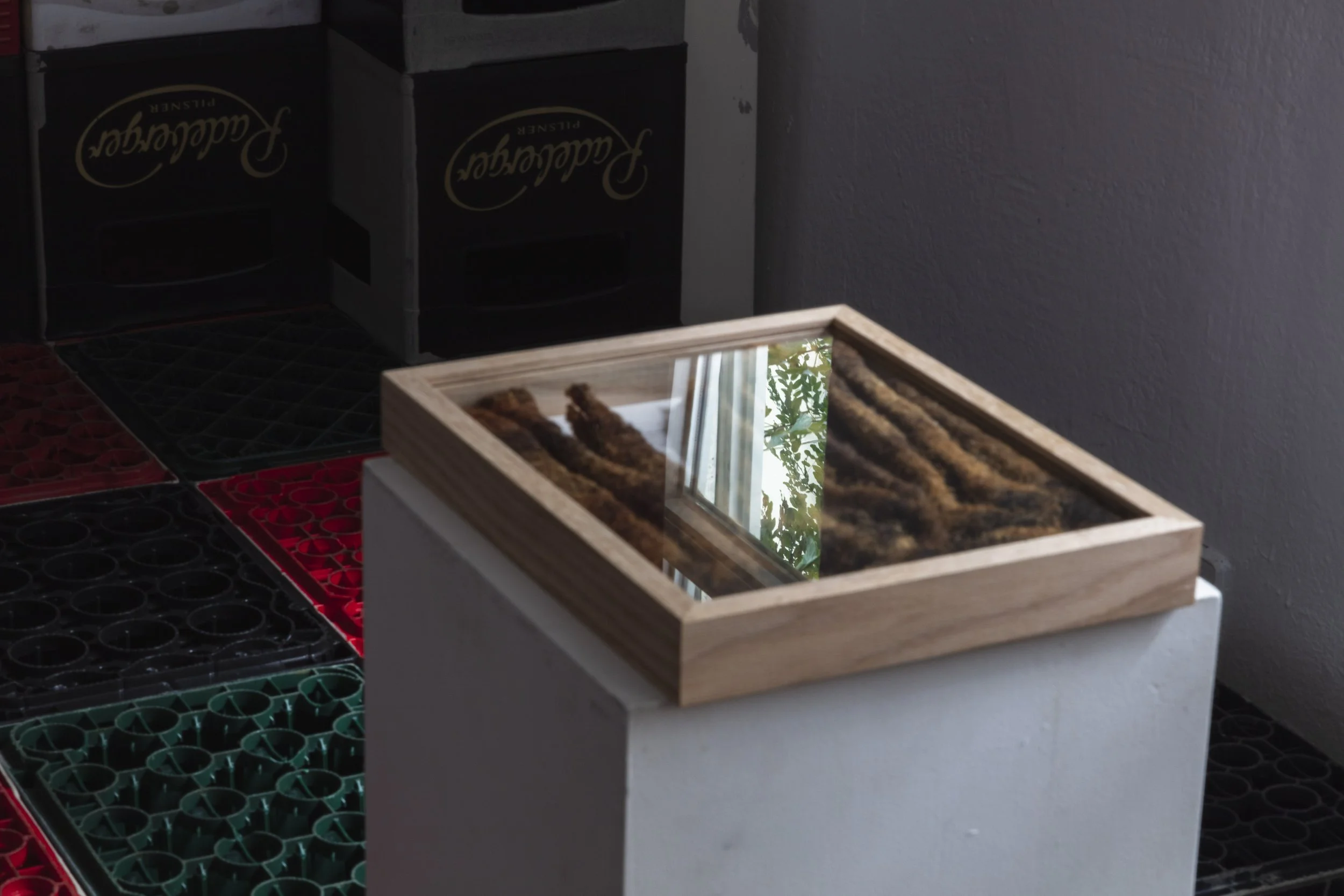
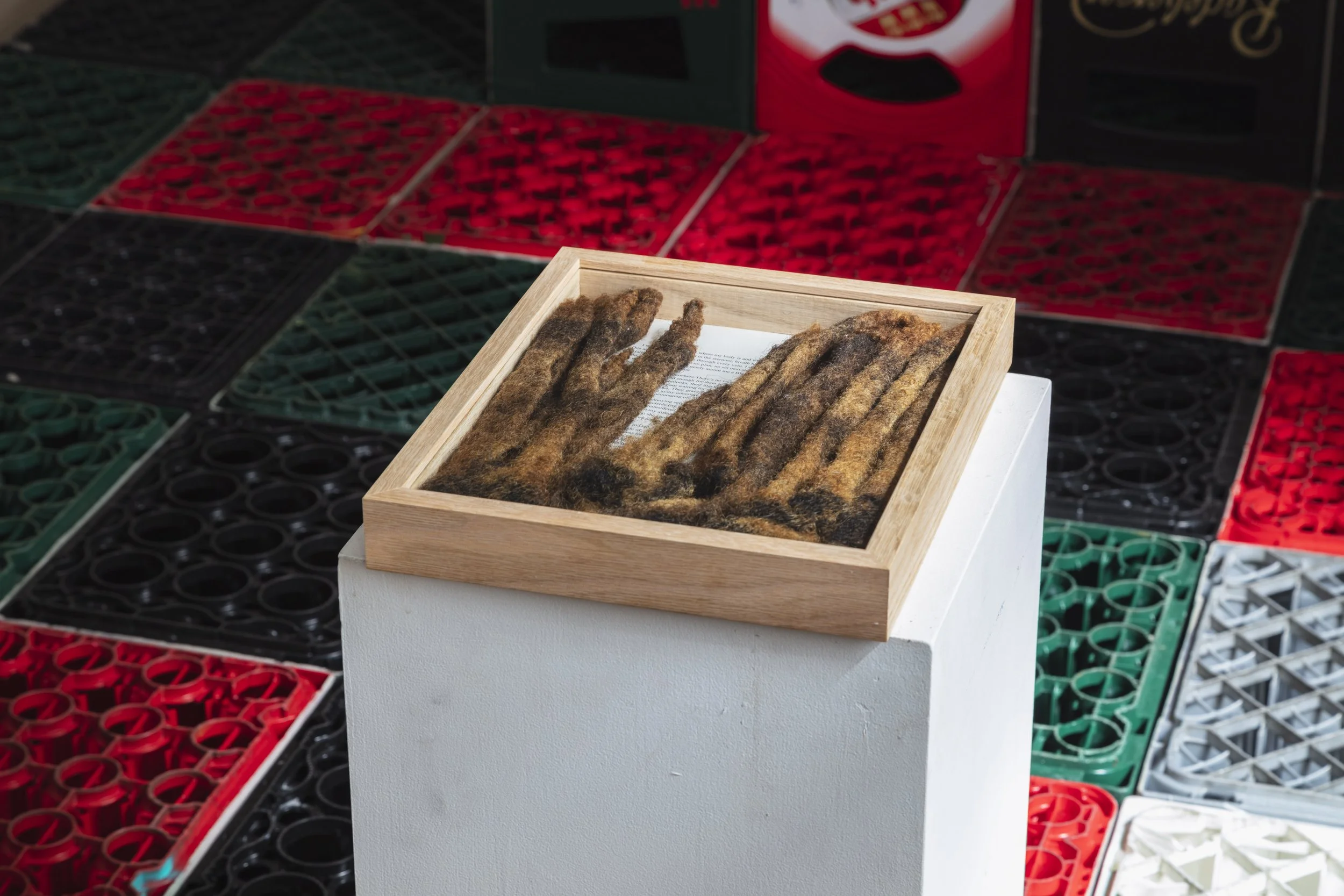
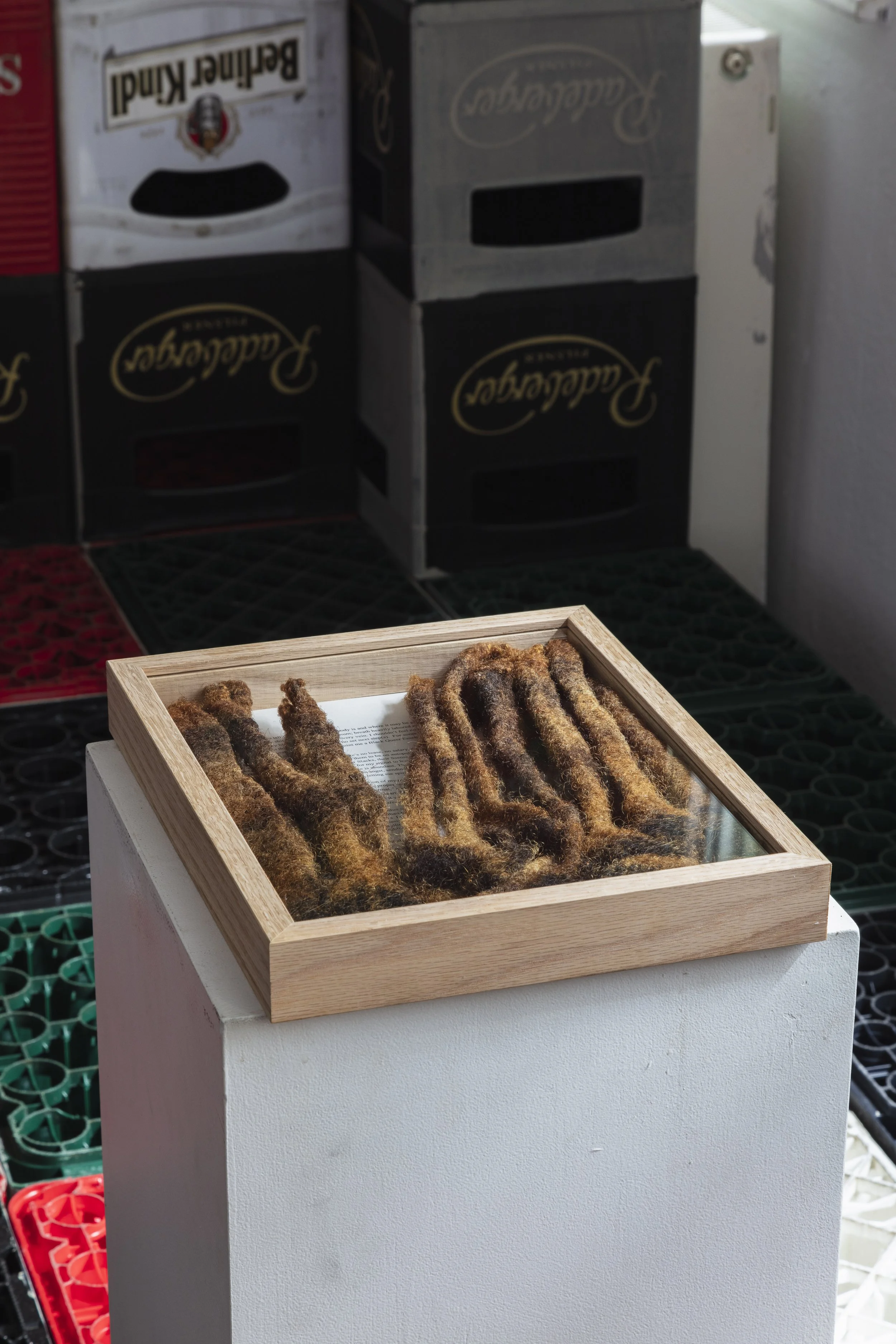
Materials: Locs, Oak wood, glass, wood pulp based paper, ink.
An Oak wood framed display case contains locs cut from Derek Anthony Holland’s head. The case also contains a typed, signed letter by Derek. The work is situated as a sculpture and image meant to reflect on what can be clearly read or cannot from the remnants of our lives in relation to the desire for all people to be seen as whole, autonomous (person) beings. The writing contends with Derek’s continued attempts to reconcile the realities of racial capitalism (the art world) and traces of community, peace and love.
To access full text click HERE
Password: being
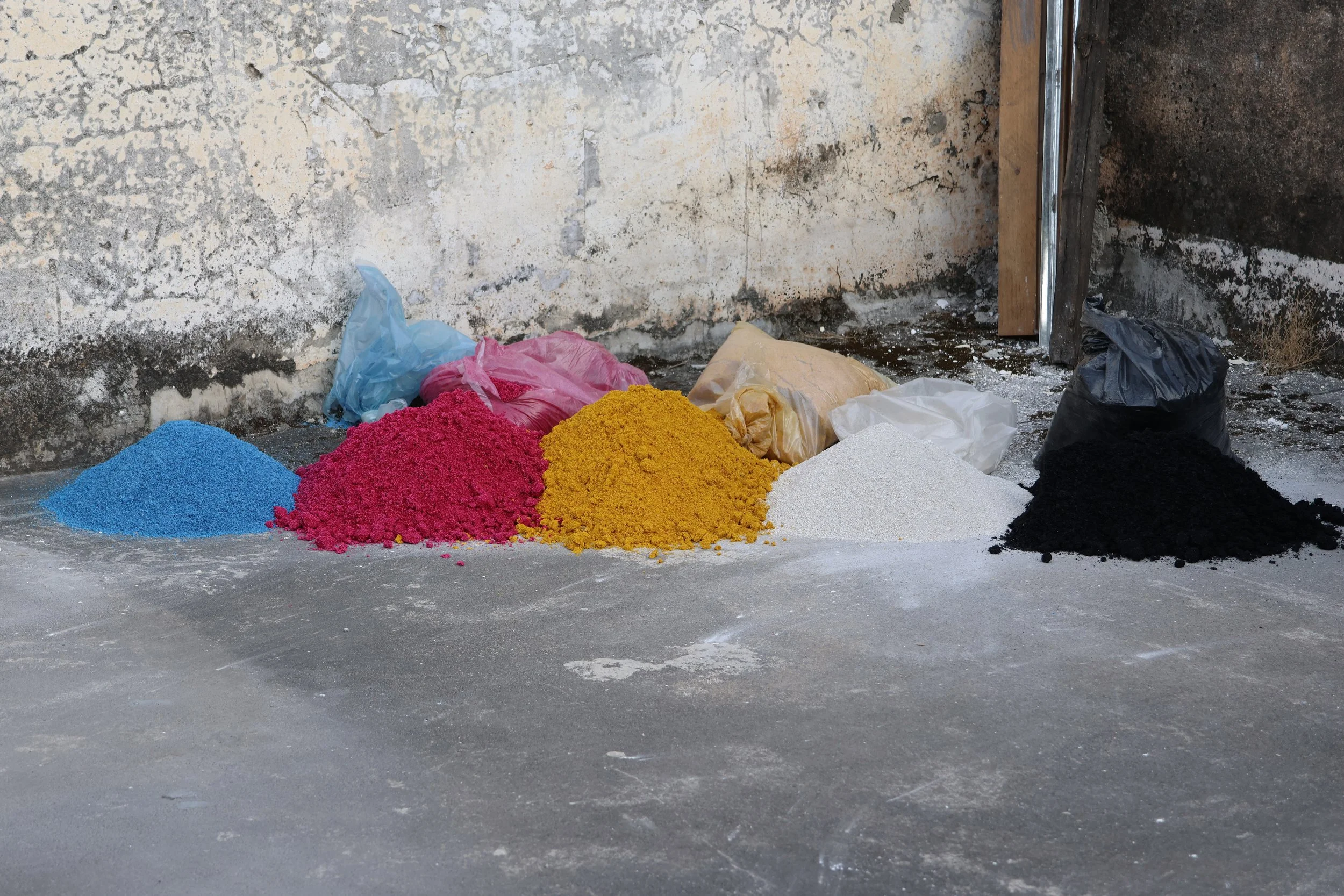
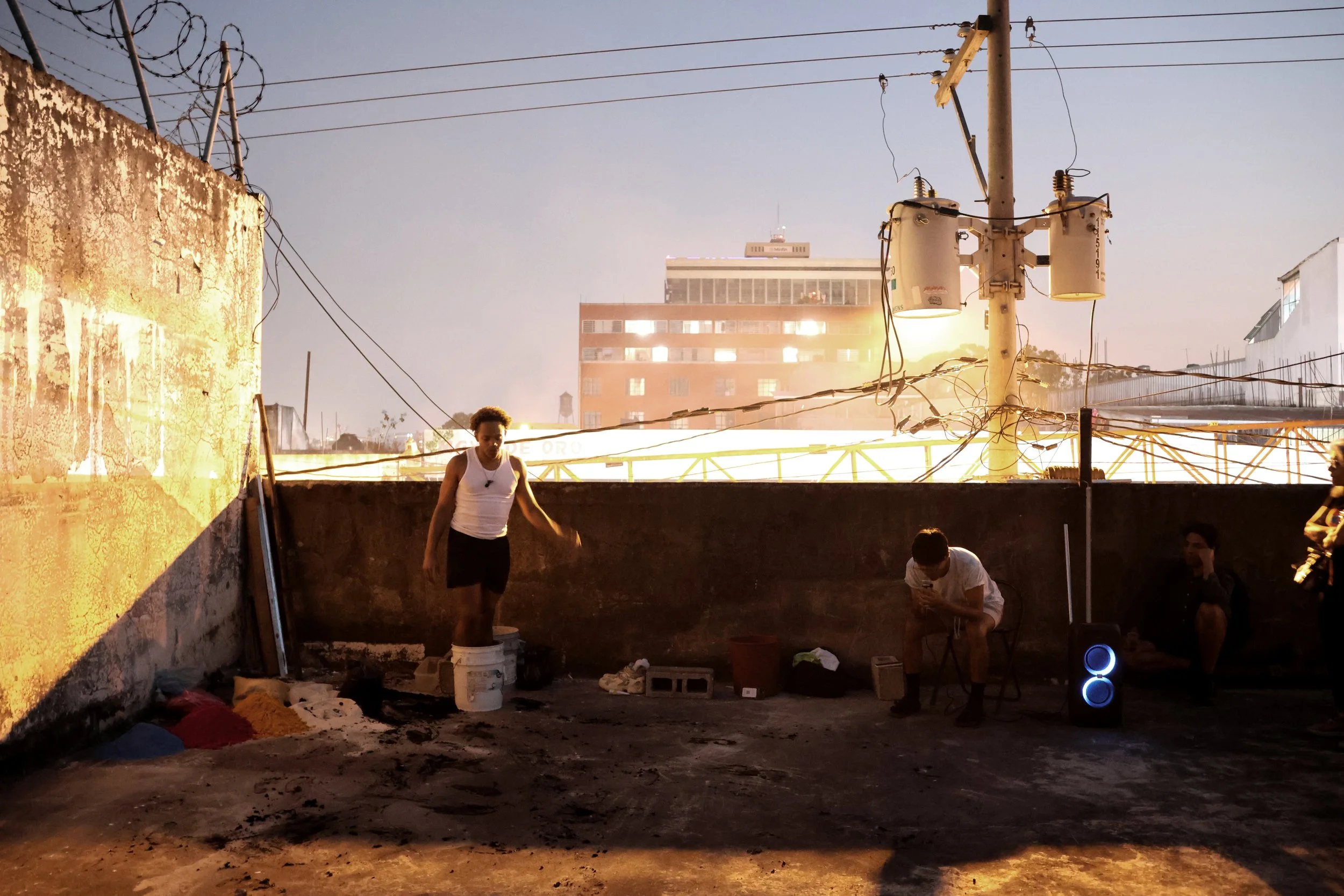
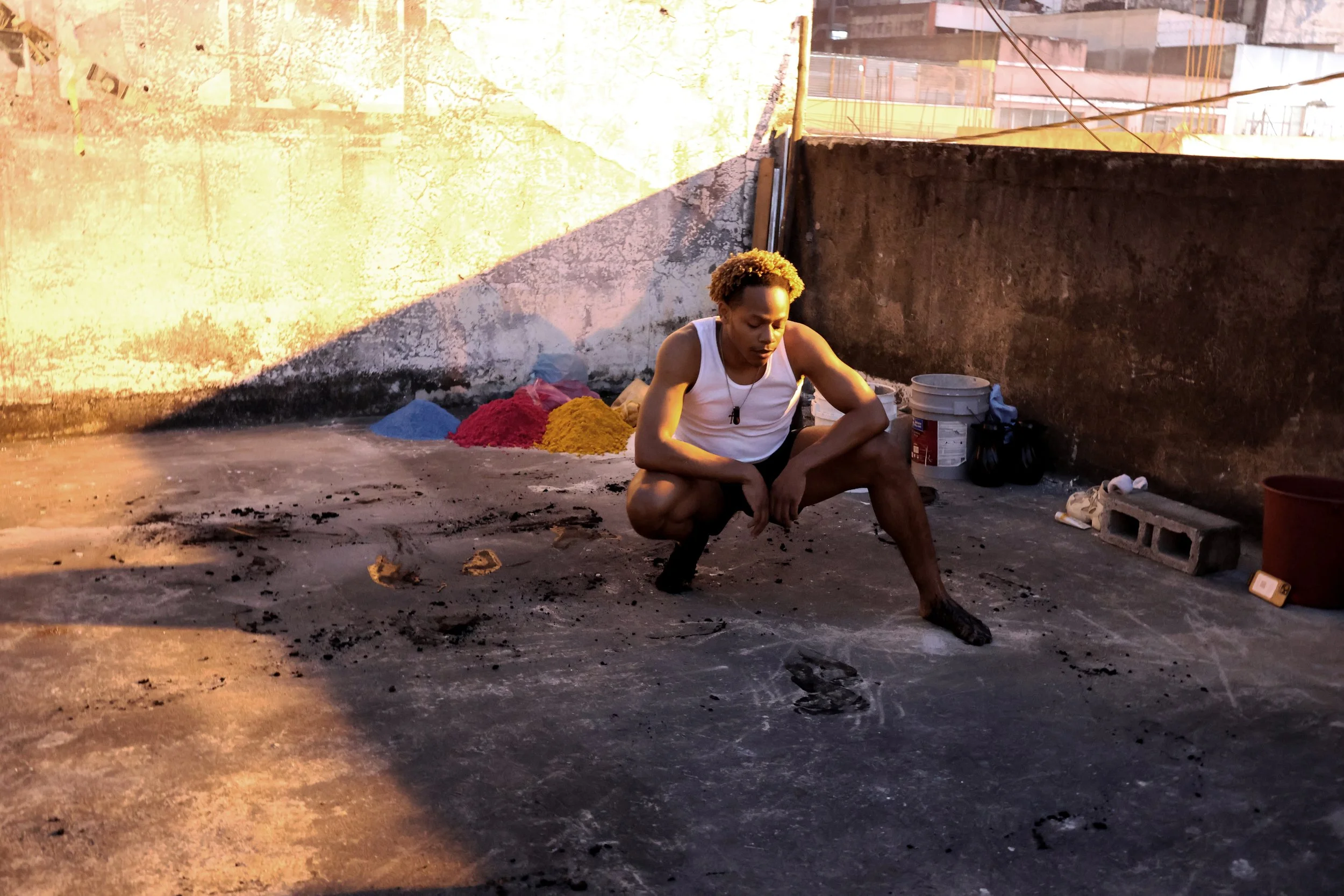
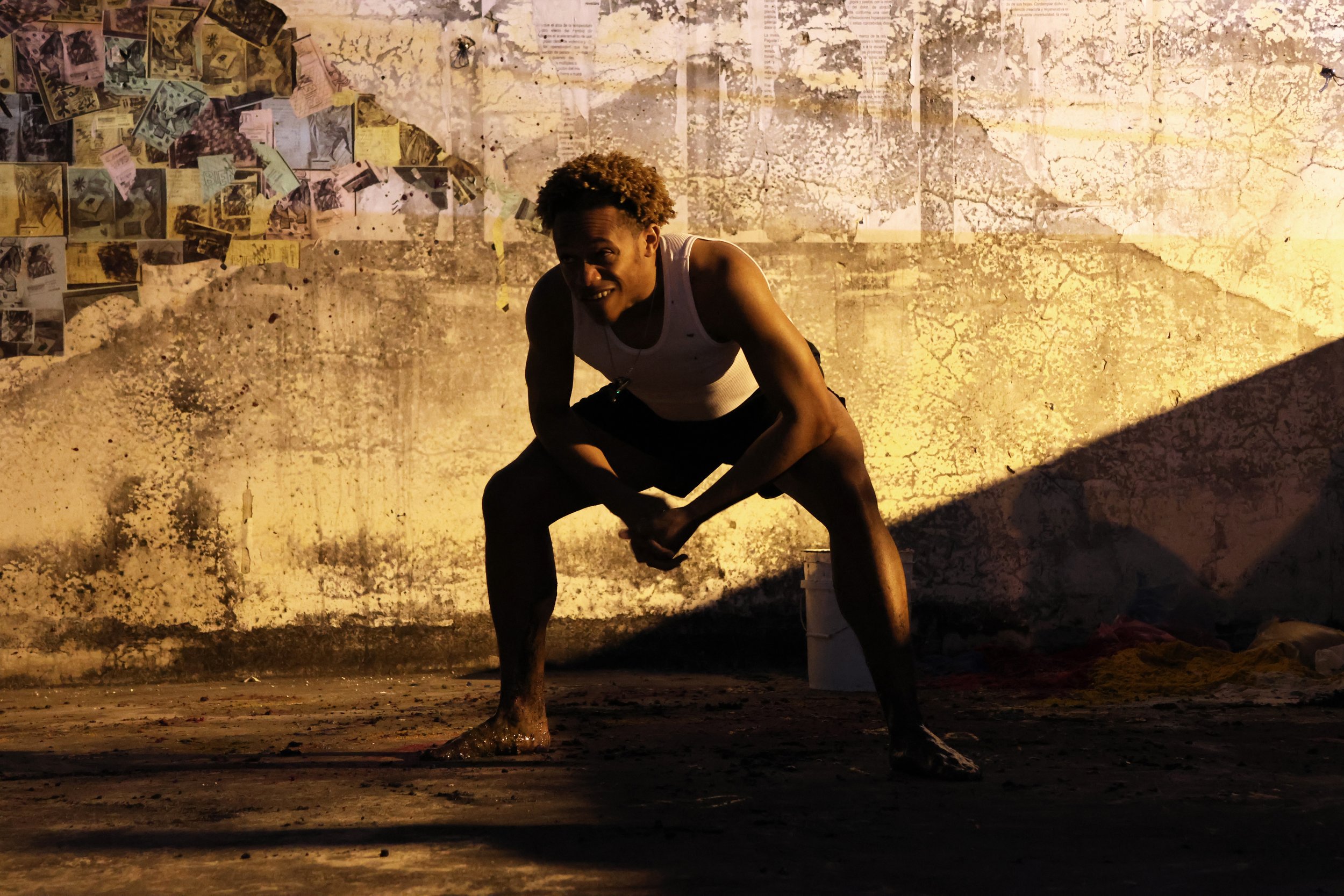
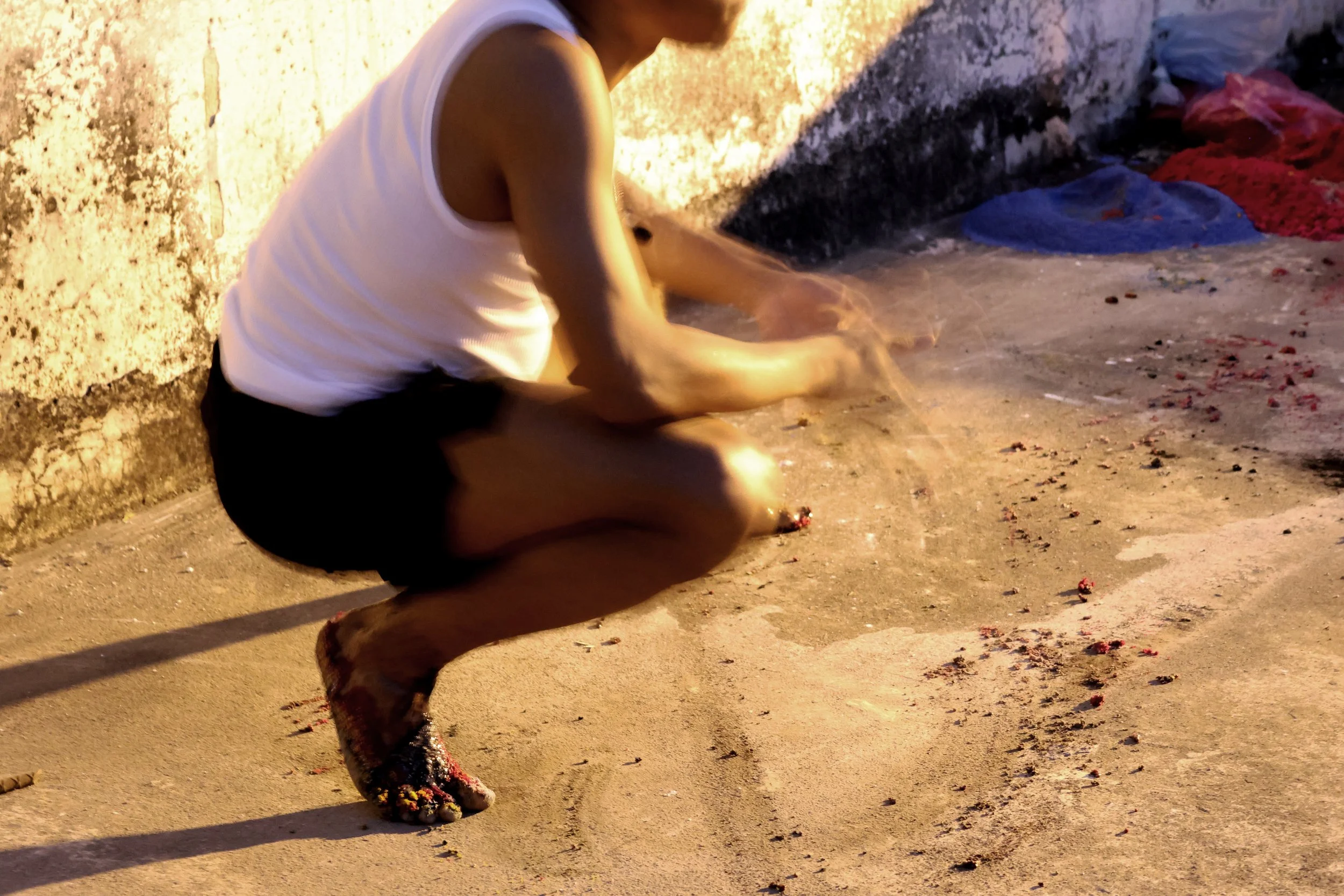
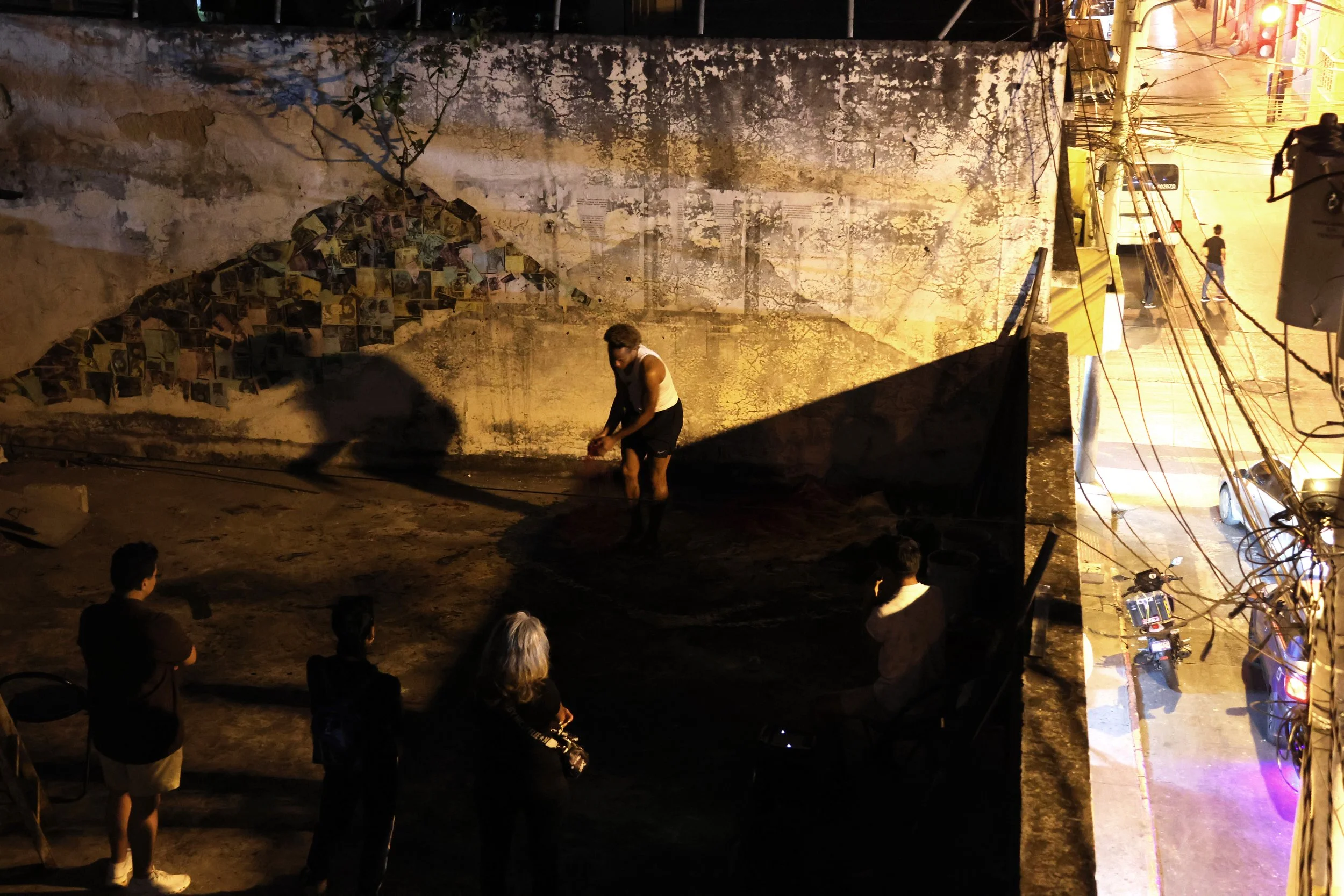
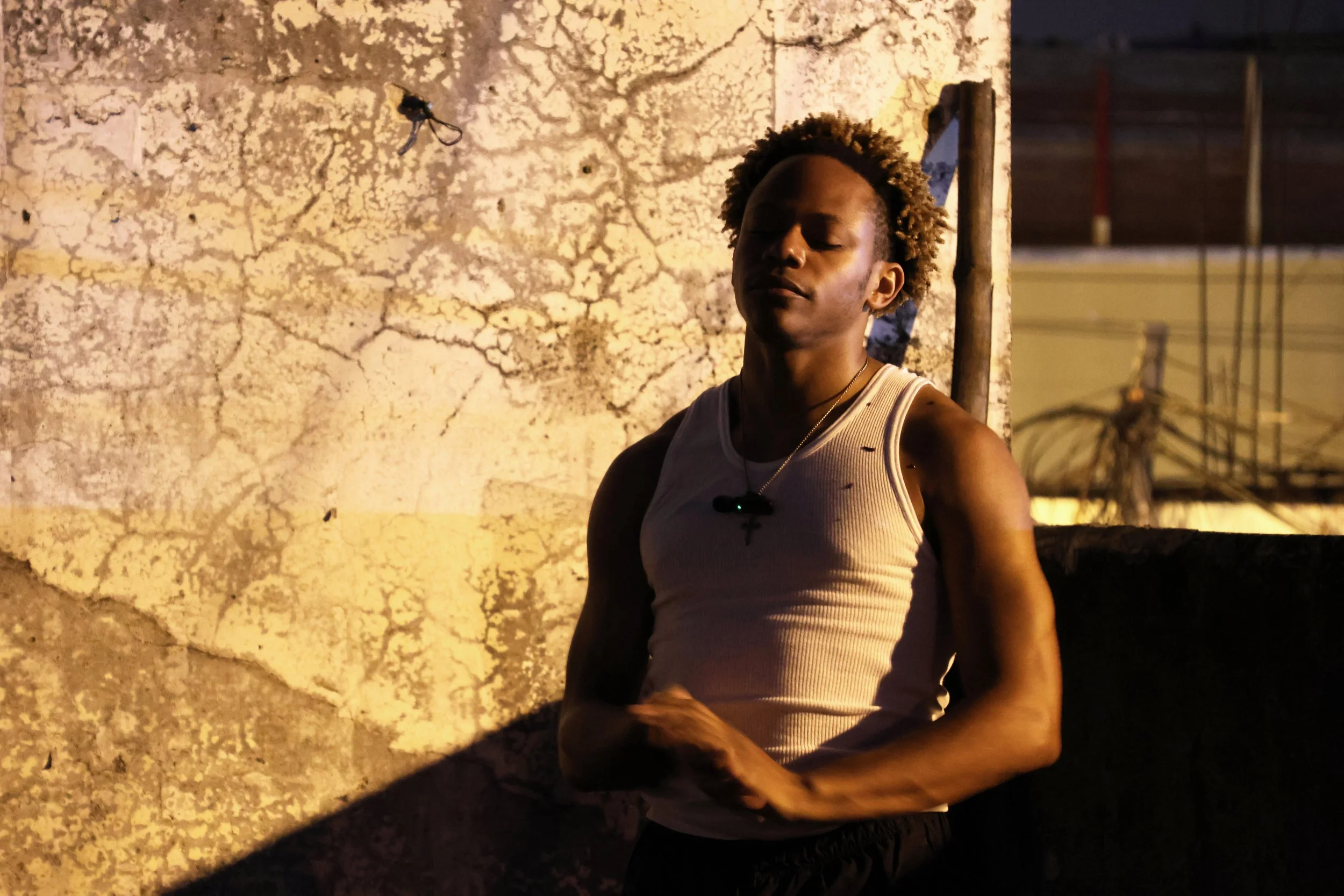
A site specific performance done in collaboration with B’alam Garcia on a Sunday evening; duration about 40 minutes. Initial description of the project was an attempt to agitate desires (for Black suffering) activated or summoned by a performance. This work drew reference directly from time spent experiencing the country of nation commonly known as Guatemala through people and land and integrate principles of community engaged research into performance work, materiality and oration; in addition to continuing the research of “As if a captive controls conditional logic (2024).”
Throughout the performance I told three stories, none fully scripted; each topically dealing with personal relationships, love and loneliness.
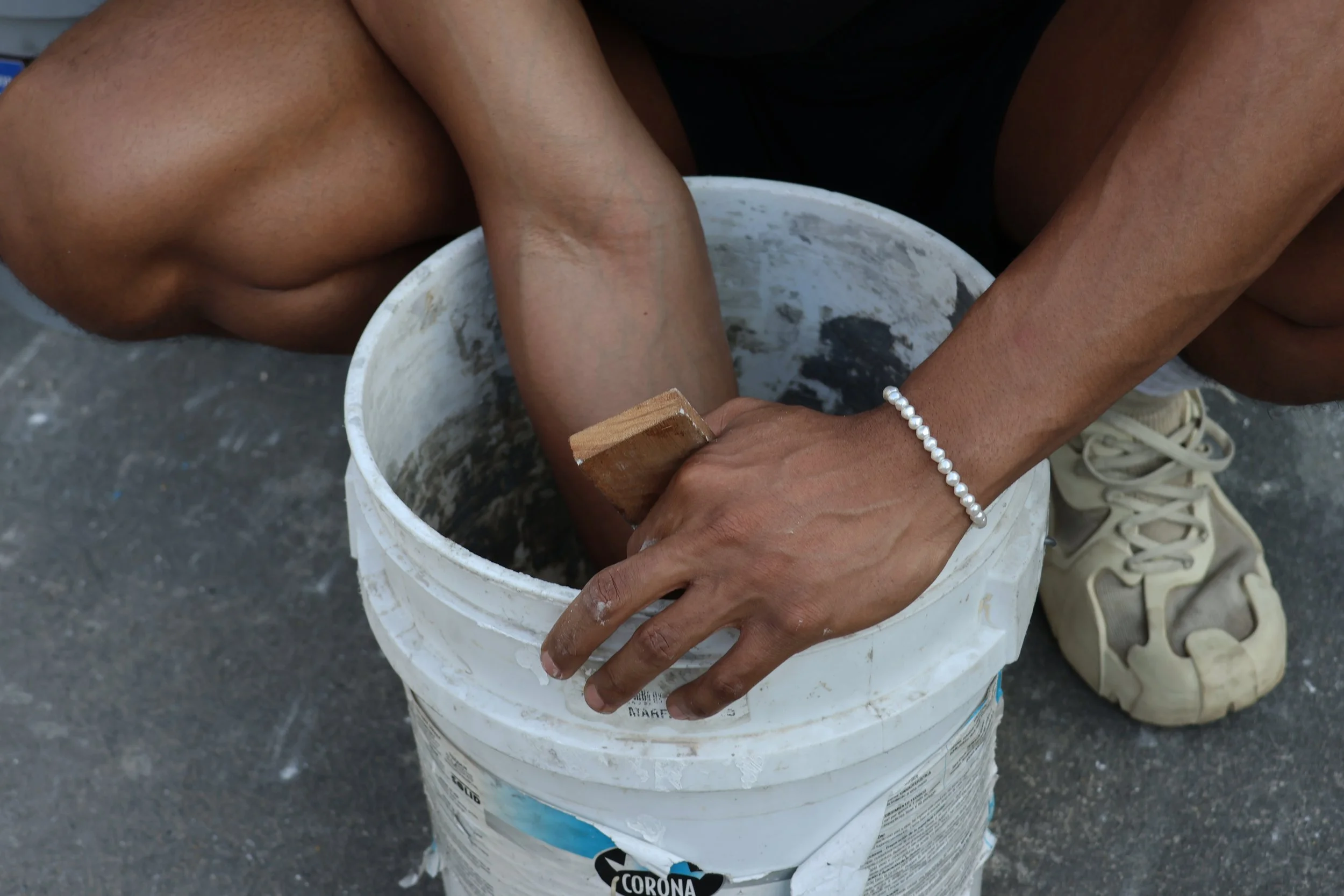
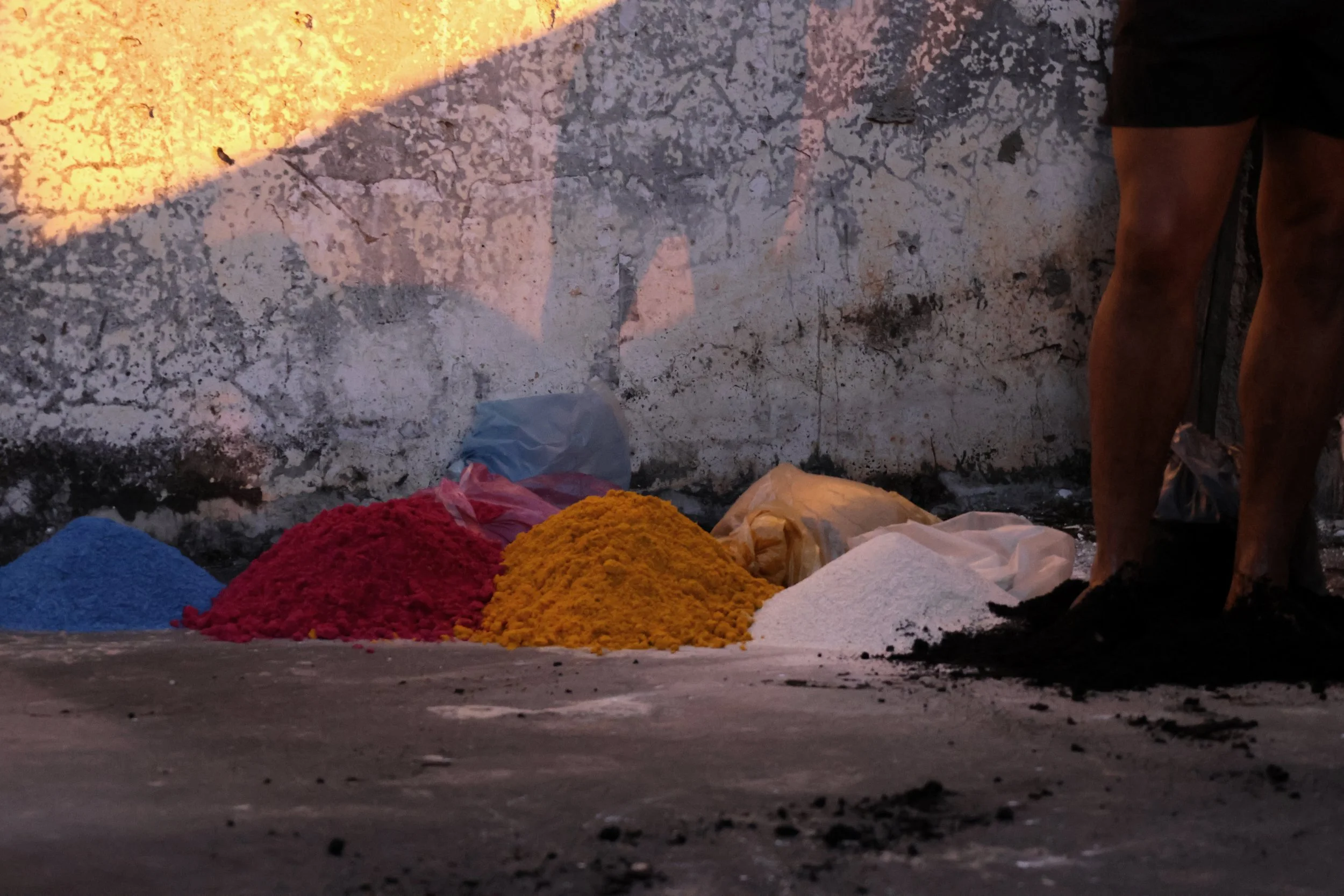
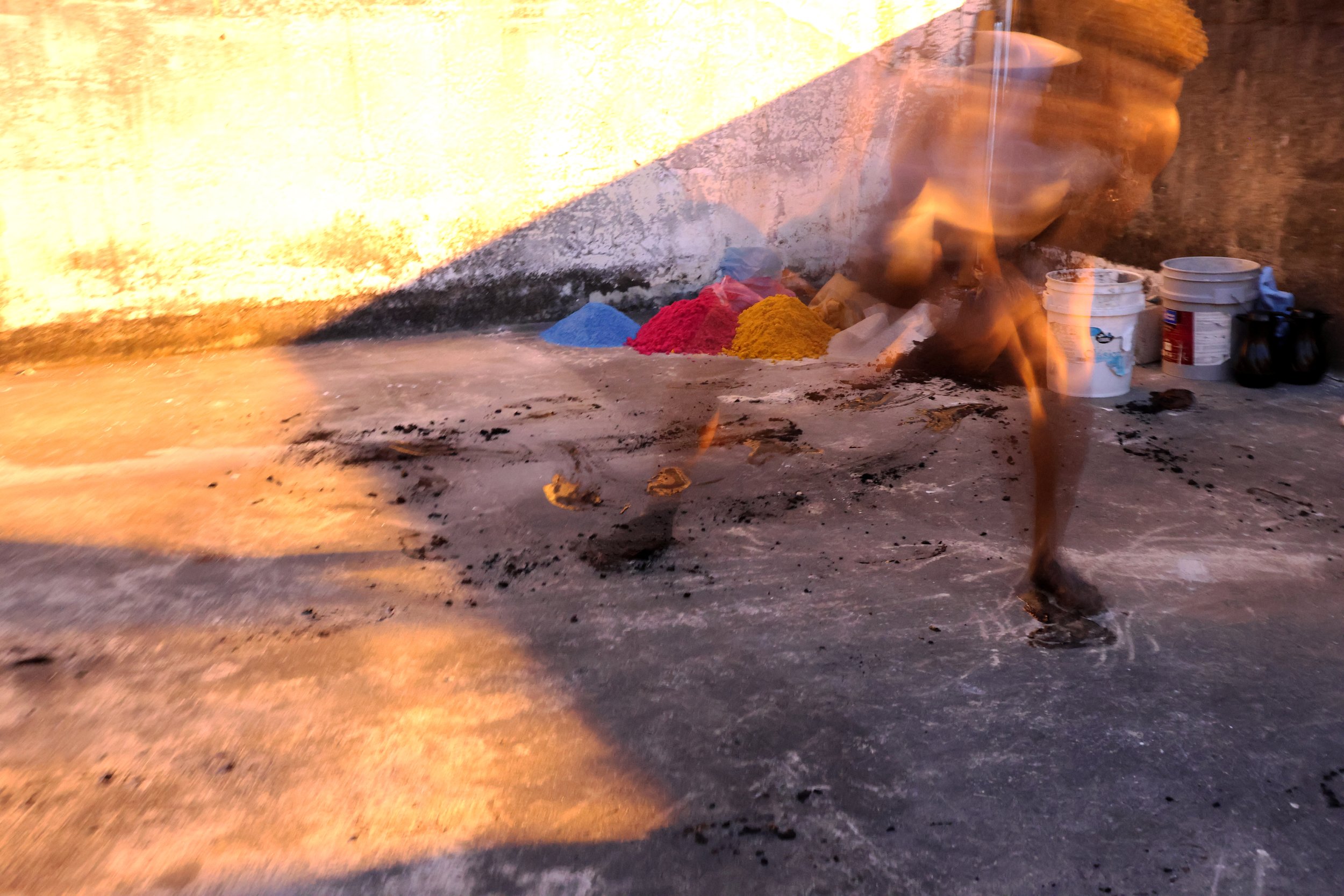
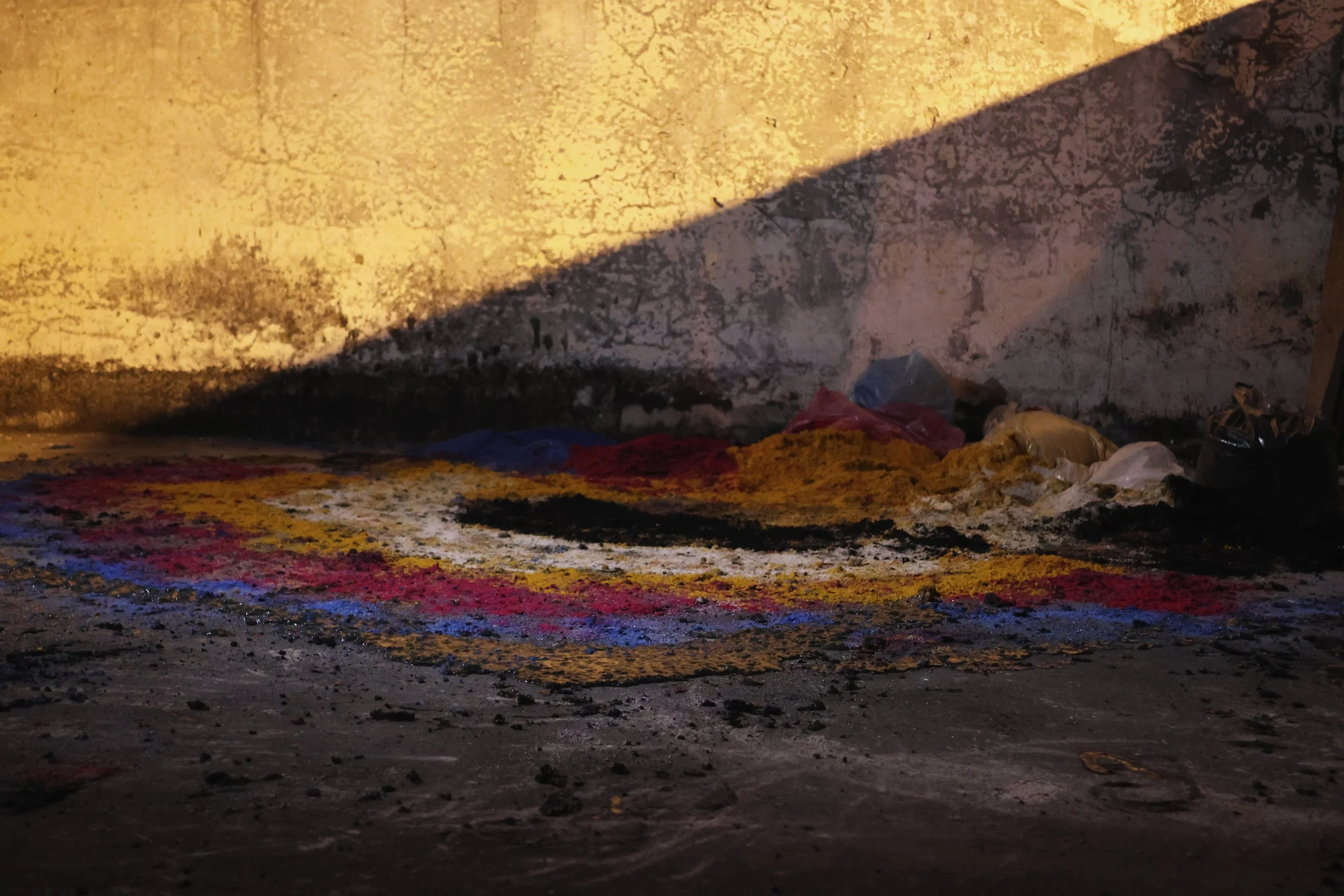
The material was yucca paste and dyed, fine grain sand and finely ground wood chips (a bit thicker than wood dust) typically used to create “Alfombras,” or flower carpets for Catholic processions during lent and holy days. These, sometimes densely complex and ornate carpets are then walked over by Cucuruchos, bearers of biblical scene floats.
This palette was CMYK (cyan, magenta, yellow, key) + White, continuing this from past painting work; this evoking a constraint of the digital space. This palette works together to anchor the markings as representations of a Black technical object IRL (in real life), that object being my body.
The remnants of the work were removed one day after the performance, possible evidence of both the ephemeral nature of the material and its evocation of anti black desire.
Photos courtesy of Josue Castro
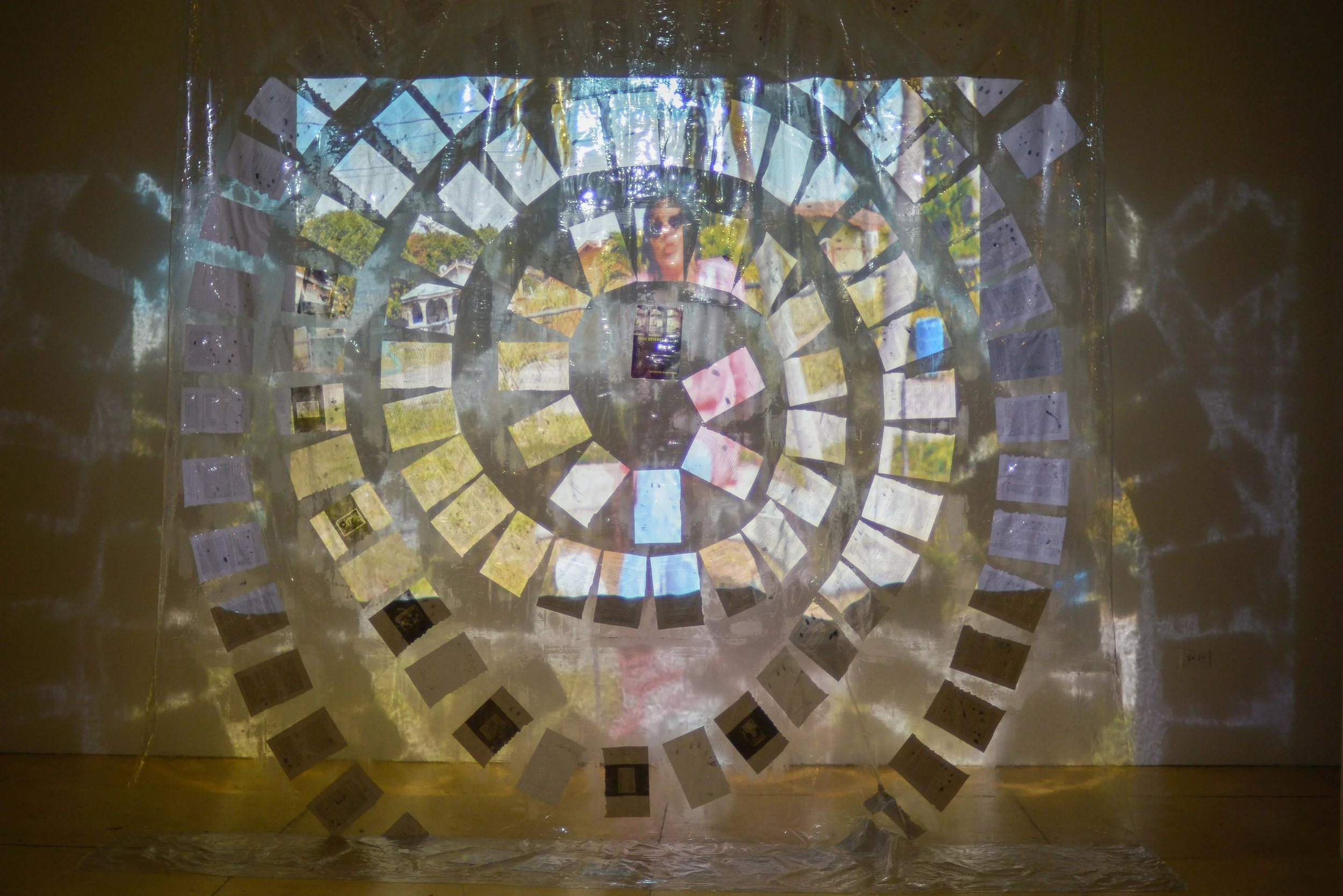
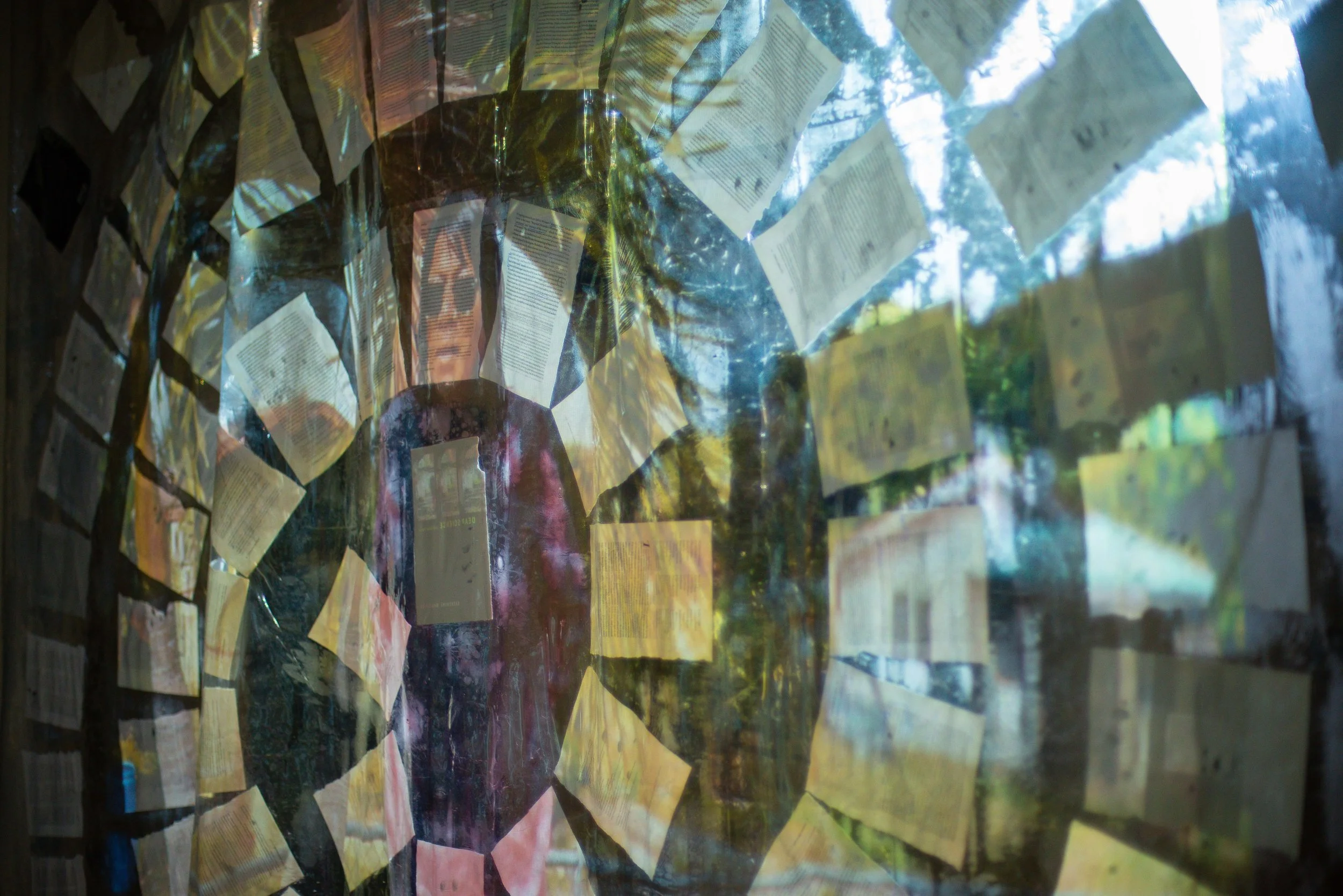
Dimensions: (varies) ~138in x 138in or ~350.5cm x 350.5cm.
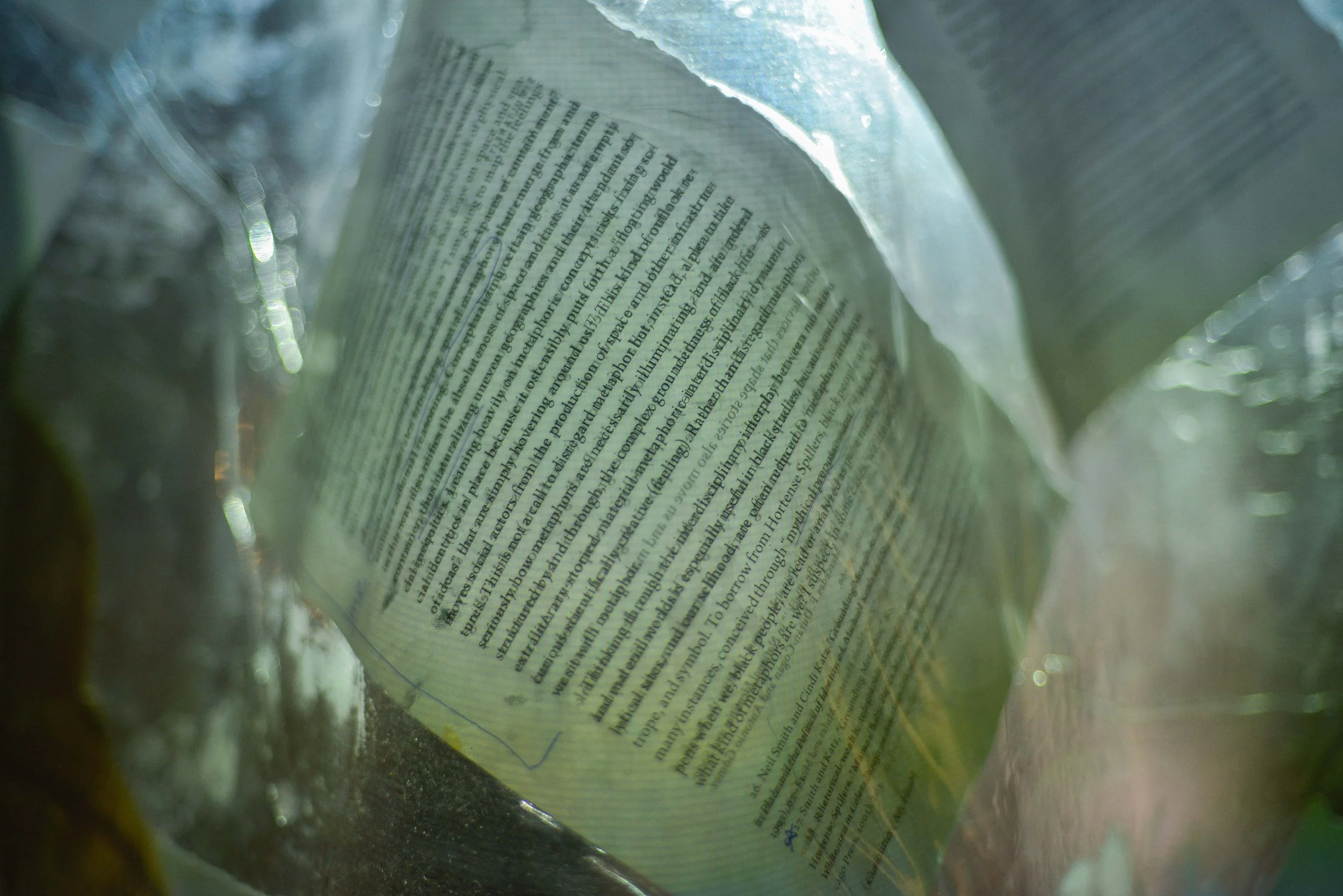
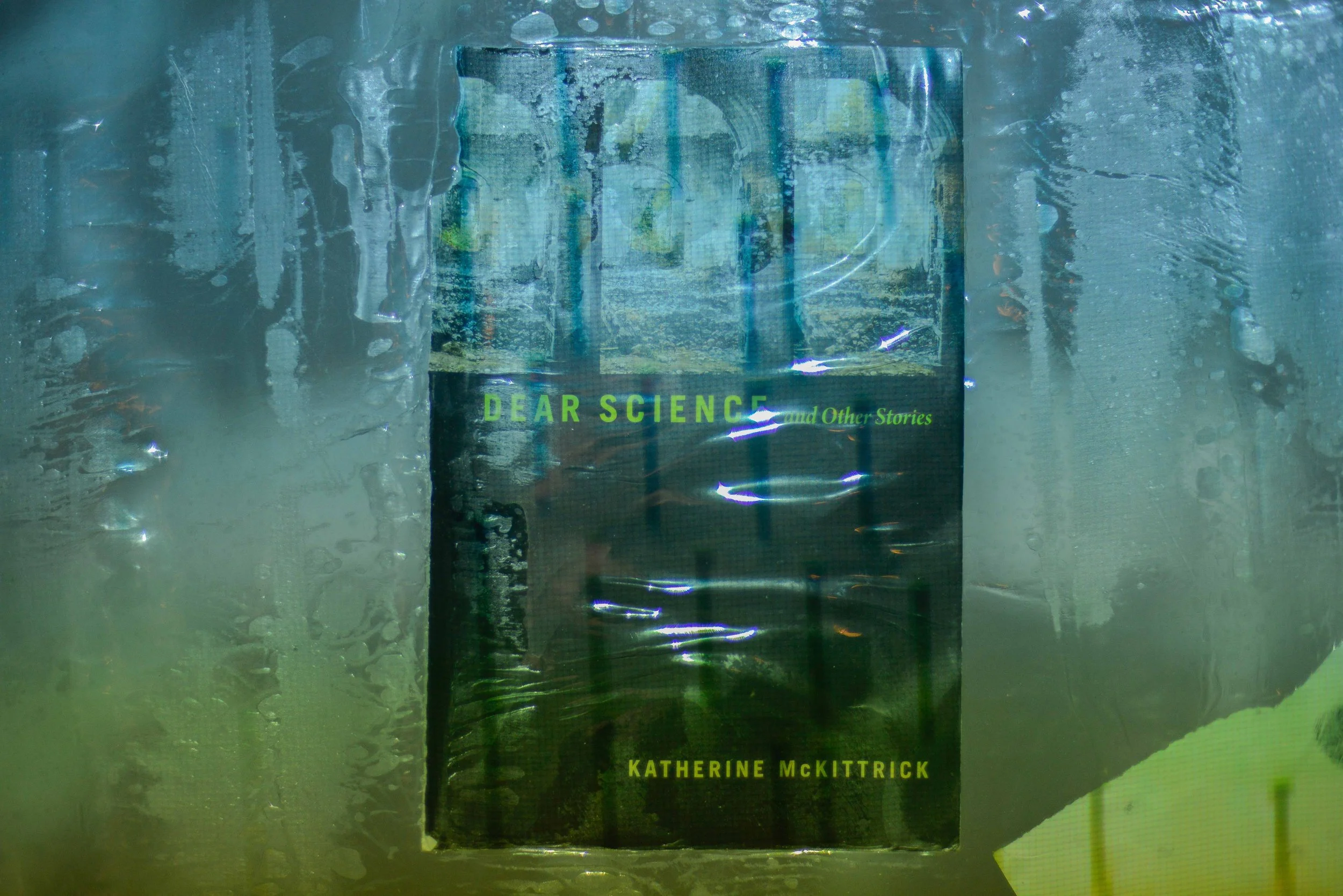
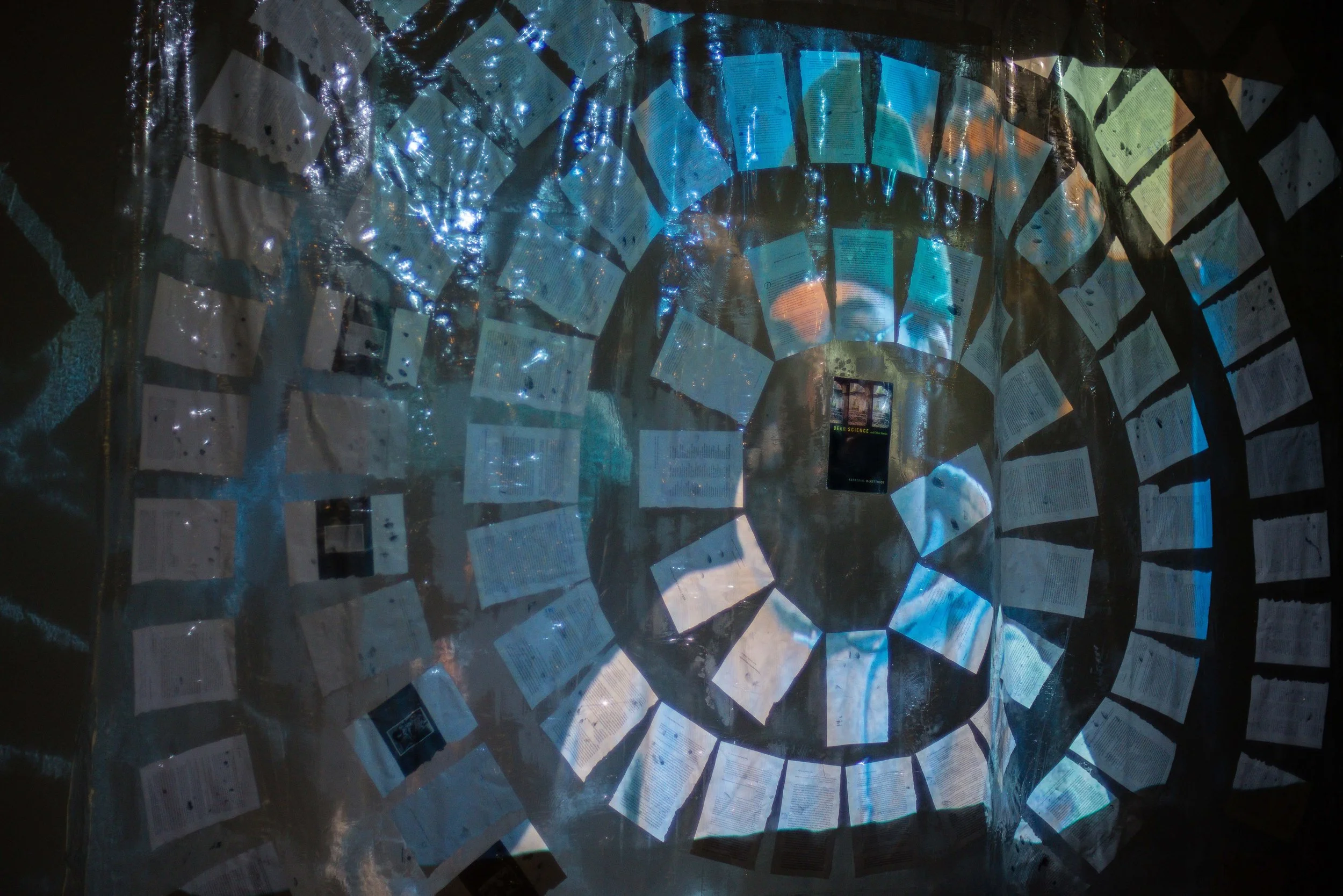
The piece is made of deconstructed pages of “Dear Science and Other Stories”, by Kathrine McKittrick (2021) annotated by myself using blue and black ink. This piece represents my pondering “What is essential to my practice?” To lose “lose discipline,” in grain community, build plasticity, and trans-late. Annotation, deconstruction, malleability, scale, opacity all begin to answer that question and lie in the form and materials relationship.
Lose Your Discipline #2 (The Black Technical Object by Ramon Amaro)
MATERIALS: Wood pulp based paper, synthetic transparent fabric, ink
DIMENSIONS: Varies (~397cm x 275cm (157x 109in))
Lose your Discipline #3 (Death of Vivek Oji by Akwaeke Emezi)
MATERIALS: Wood pulp based paper, synthetic transparent fabric, ink
DIMENSIONS:Varies ( ~397cm x 275cm (~157x 109in))
ADDED INFORMATION: Work created by annotating entire text with pen and ink, book unbound and pages pressed by hand ironing between vinyl plastic sheets.
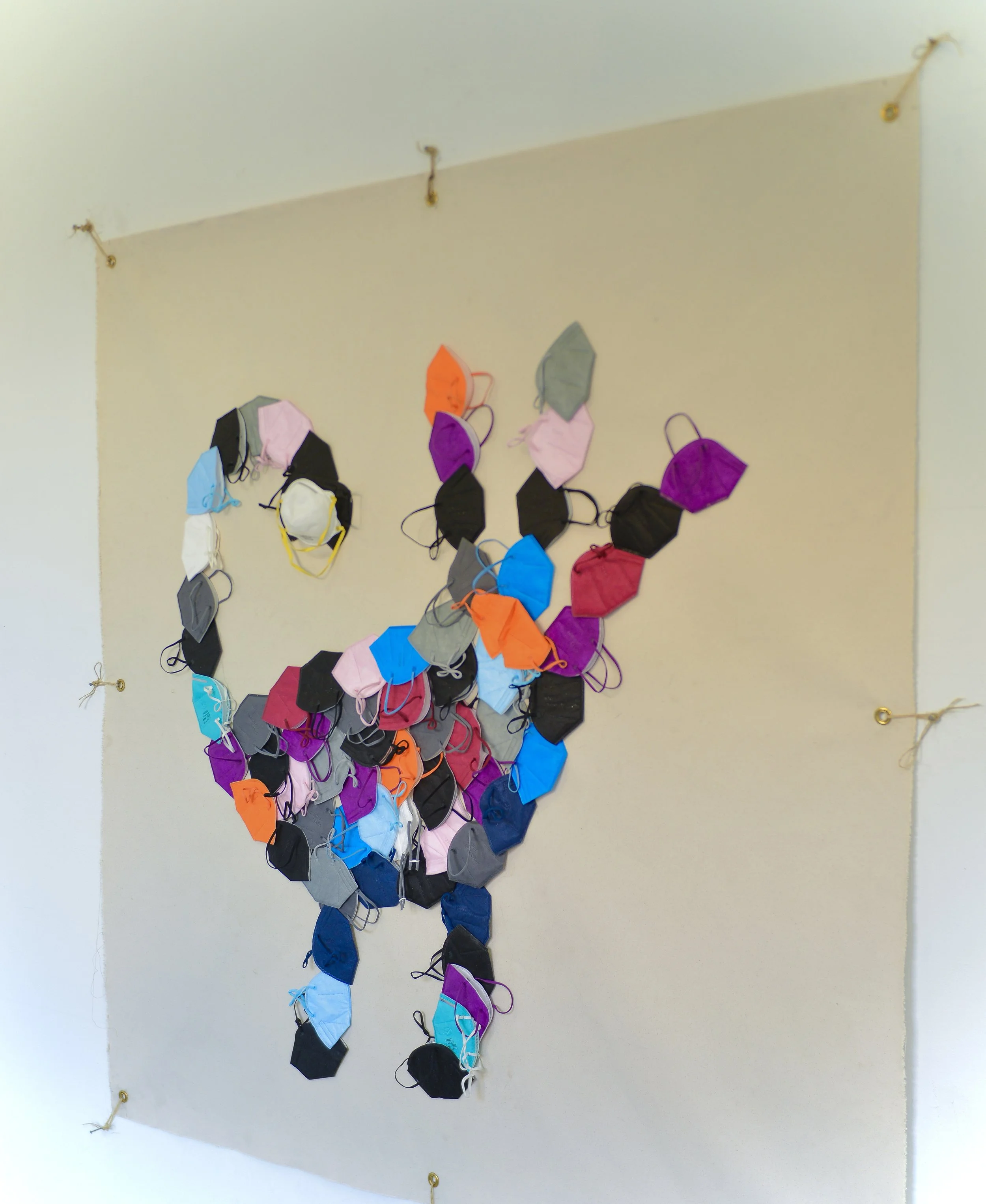
Sankofa (2022). Linen canvas, polyurethane polymers (N95 and KN95 masks), biodegradable twine, metal nails. 6x6ft (1.84x1.84m)
Composed of multicolored facial masks, Sankofa, sheds light on the implications our past decisions during the COVID-19 Pandemic have in the present and future. The imagery references is the Sankofa bird, a symbol originating from the Akan people of Ghana. The Sankofa meaning is to retrieve, to go back and get. It signifies the quest of investigation and the profound knowledge acquired when we ruminate on the past.
The inspiration for this work is to make something that would respond to the omnipresent pressure to return to normalcy that has come at this stage in the COVID-19 pandemic with specific emphasis on two points. One, With some understanding of data pertaining to fully vaccinated populations, reinfection possibility, and studies beginning to investigate long term effects of COVID-19 strains, I feel normalcy in a pre-2020 sense isn't possible and shouldn't be an aim for our world. Second, aspects of our country's response to COVID-19 ( e.g. remote work and learning, supplemental income, moratoriums on rent and other utilities, expanded basic supports) were beneficial for poor and disabled communities and now are disappearing. The world evoked heavy introspection, reflection and disappointment from me- and that's what brought about utilizing these masks and the symbology of the Sankofa.